
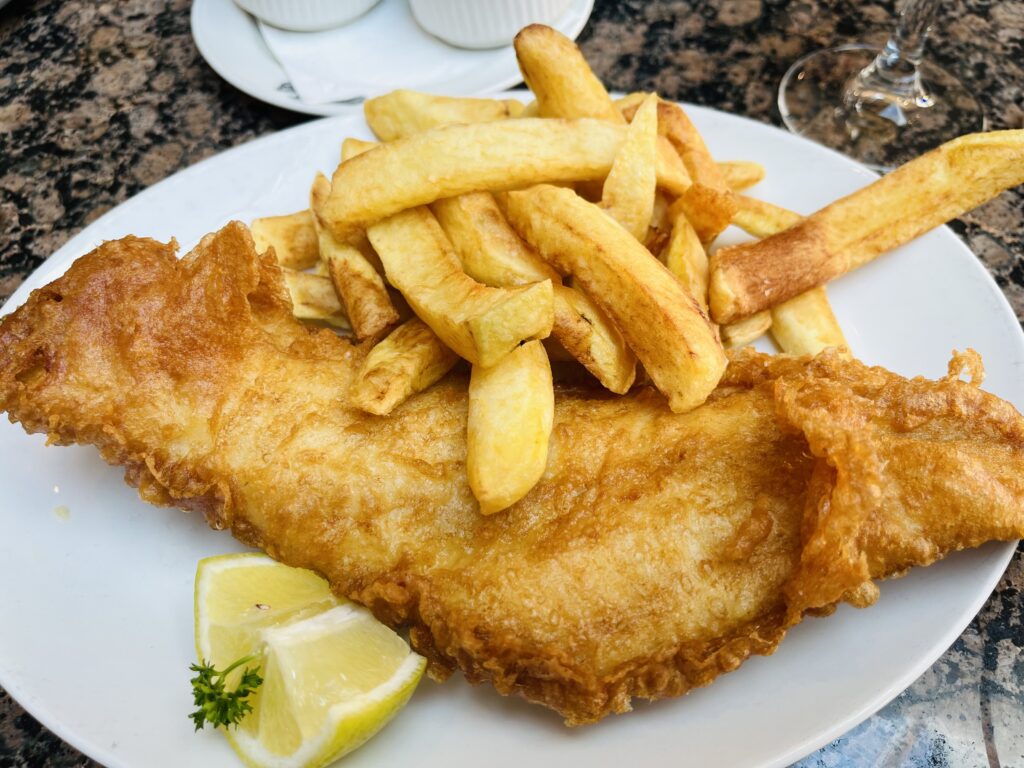
Why Do Brits Eat Fish & Chips on Fridays? The Story Behind a Beloved British Tradition
When you think of British food, what comes to mind first? For most people, it’s fish and chips. Crispy, comforting, and iconic — it’s more than just a national dish. But did you know there’s a long-standing tradition in the UK where people eat fish and chips every Friday? It’s what locals call “Fish Friday.”
When I was filling out my children’s school lunch options, I noticed something curious — fish was always on the menu every Friday. At first, I thought it was just a rotation thing. But after a while, I started wondering: why fish on Fridays?
Then one day, I was watching the JTBC programme “The Korean Plate” (한국인의 식판), where a Korean chef, a nutritionist, and a few celebrities visited an Oxford school to prepare lunch. And sure enough — Friday’s menu was fish and chips! Suddenly, it all made sense. It wasn’t just a menu cycle. It was a tradition.
So Why Do Brits Eat Fish & Chips on Fridays?
1. Catholic Roots: No Meat on Fridays
The biggest historical reason comes from Catholic tradition. For centuries, Catholics have avoided eating meat on Fridays to commemorate the crucifixion of Jesus Christ. Instead, they would eat fish as a form of fasting and reflection. This practice spread through schools, hospitals, and even military meals — and its legacy still quietly continues today across Britain.
2. The People’s Meal: A Working-Class Favourite
Fish and chips became popular during the Industrial Revolution in the 19th century. It was cheap, filling, and easy to eat after a long day at the factory. For many working families, fish and chips on a Friday evening became a weekly ritual — a treat to mark the end of the week. Over time, this habit trickled down into school menus too.
3. A Set Menu Tradition in Schools
Nowadays, the tradition continues in a more practical form. Many British state schools have a menu rotation system, and “Friday = Fish Day” has become almost a default setting. Children love it, it’s nutritionally balanced enough, and it keeps a sense of cultural continuity. It’s less about religion now — more about comfort, routine, and tradition.
4. Industrial Revolution and Fish Supply
Thanks to the development of railway networks and refrigeration in the 18th and 19th centuries, fresh fish from coastal towns could reach inland cities quickly. This made fish affordable and widely available. During both World Wars, fish and chips were even exempt from rationing — that’s how important it was to British morale and daily life.
Top 5 Fish & Chips Destinations in the UK
1. Whitby
A charming seaside town famous for its fresh cod and haddock. Some of the UK’s most beloved fish & chips shops are here — Magpie Café and Trenchers are absolute classics. Fun fact: Whitby Abbey also inspired Bram Stoker’s Dracula!
I recently visited Whitby myself — if you’re curious, check out my full post here 👇
🇬🇧 [Whitby Fish & Chips Guide – The Real Local Favourites]
2. Anstruther
Home to the award-winning Anstruther Fish Bar in Scotland. They serve fish caught locally that morning — ultra fresh and perfectly fried. The harbour views make it even more special.
3. London
The capital has taken fish and chips up a notch, reinterpreting the classic dish in modern styles. Try Poppies in Camden or Soho, Golden Union in Soho, or Fish Central in Clerkenwell. It’s a fun mix of nostalgia and trendiness — best enjoyed with a pint at the pub.
4. Brighton
There’s nothing more British than eating fish & chips by the sea breeze. In Brighton, you’ll find endless options — Bardsley’s, Bankers, and The Regency Restaurant are long-standing local favourites. Grab a portion and walk along the pier — it’s pure coastal joy.
5. Padstow (Cornwall)
Home to celebrity chef Rick Stein’s famous Fish & Chips restaurant. The Cornish coast is renowned for its seafood, and Padstow blends culinary excellence with artistic, seaside charm.
Why the Curry Sauce and Mushy Peas?
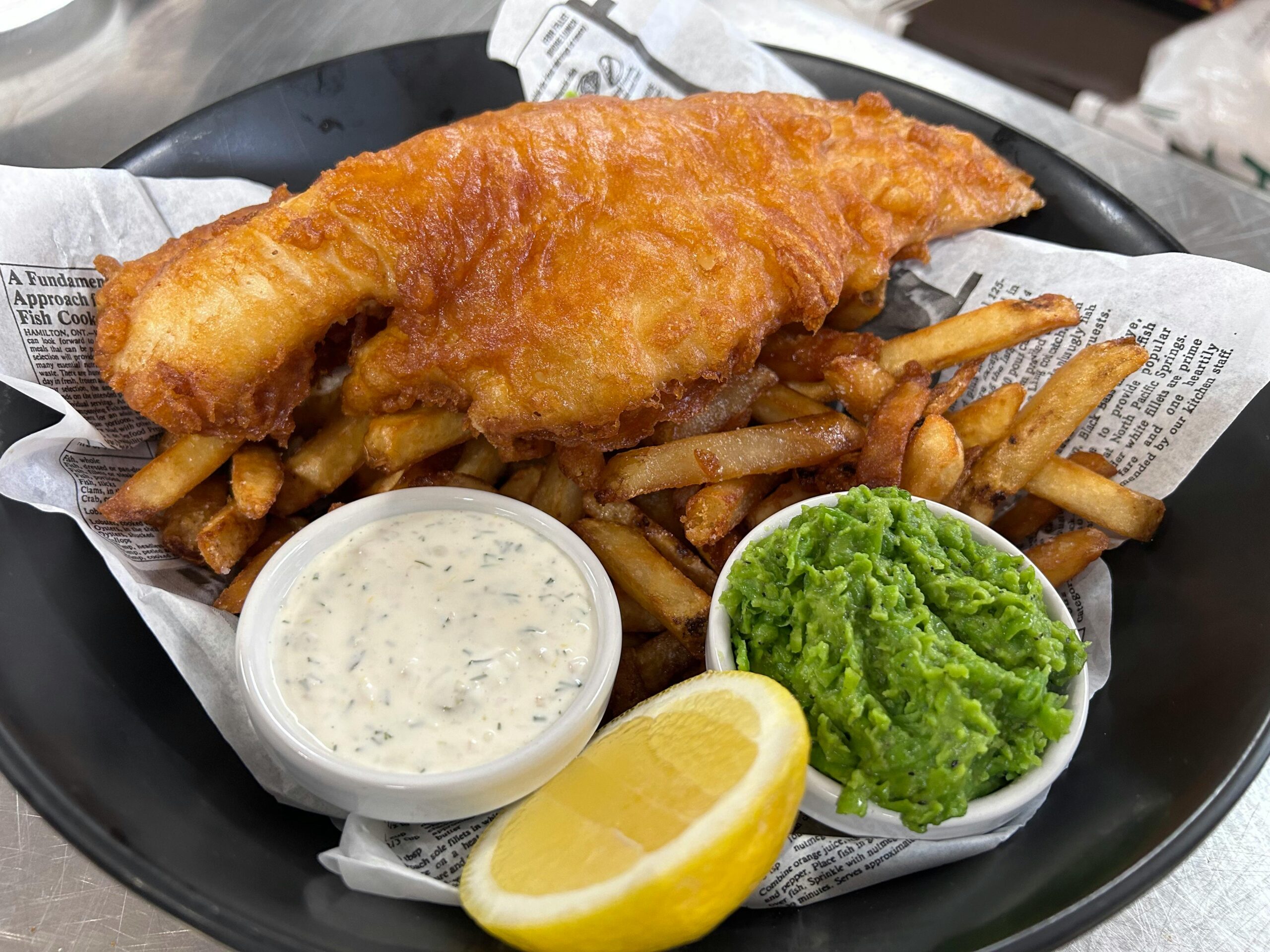
1. Curry Sauce – A Colonial Legacy
Fish & chips with curry sauce might sound unusual to non-Brits, but it’s actually a cultural fusion born from history. During and after the British colonial period in India, curry flavours became part of the national palate. In the 1950s, South Asian immigrants (especially from Bangladesh and Pakistan) popularised British-style curry sauces, which soon found their way onto chip shop menus. It’s rich, comforting, and adds a punchy twist to fried fish.
2. Mushy Peas – A Northern Favourite
Mushy peas are boiled marrowfat peas mashed with a little salt, butter, or mint. The texture helps balance the crisp batter and cuts through the oiliness. It’s especially common in Northern England and the Midlands — and yes, it’s one of those “you either love it or hate it” sides!
Salt & Vinegar – A British Must

“Salt and vinegar?” is what you’ll always hear at a chippy counter — it’s practically a ritual. The combination enhances flavour and texture. Salt boosts savouriness, while vinegar (usually malt vinegar) adds acidity that cuts through the fat and freshens each bite.
Malt vinegar, made from fermented barley malt, has a toasty aroma and amber colour. Historically, it was cheap and even acted as a mild preservative before refrigeration existed. Today, it’s an inseparable part of the fish & chips experience.
A Simple Meal, A Long Story
It’s amazing how much tradition and history can hide in something as simple as a plate of fish & chips. What started as a small curiosity from my kids’ school menu turned into a journey through British history — from Catholic customs to industrial progress and even war-time resilience.
Now, every time I see “Fish & Chips Friday” on the school lunch list, it feels a little more meaningful. Maybe that’s what makes living here so fascinating — you never know what story might be hiding in your everyday life.
So next Friday, when you hear that familiar crunch of crispy batter and chips, remember — you’re not just eating a meal. You’re tasting a piece of British history.
This, to me, is what I call a ‘little world trip through everyday life.’