
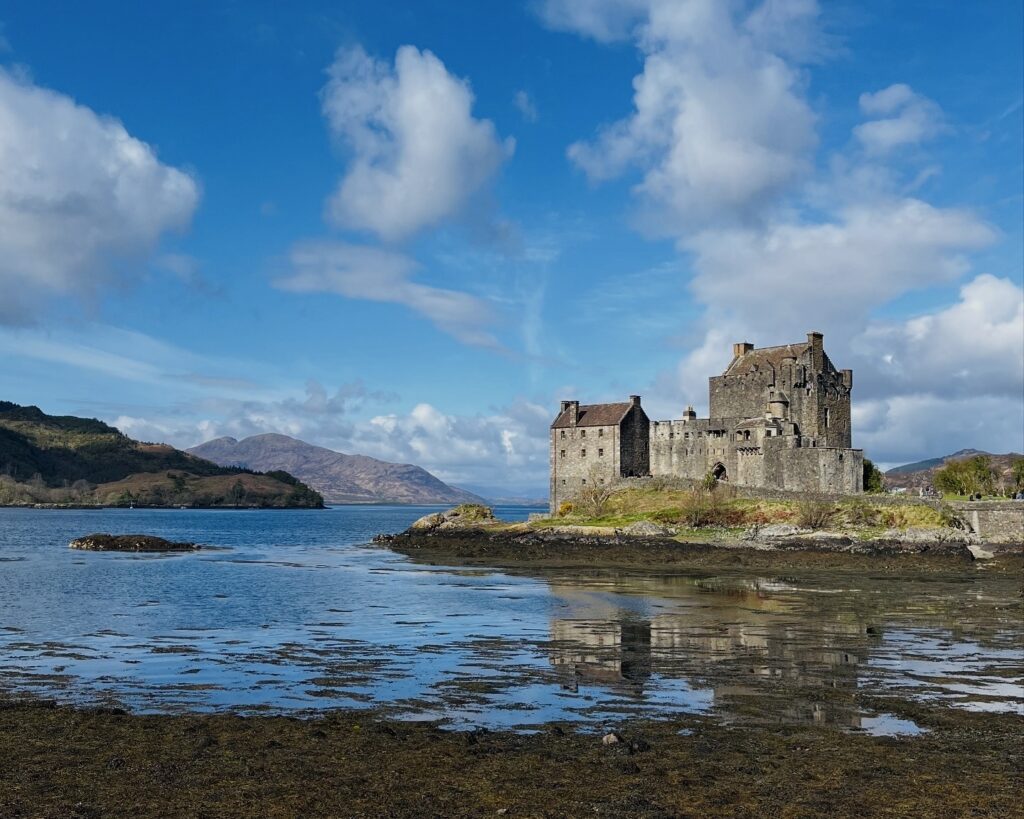
Eilean Donan Castle: A Scottish Fairytale Come to Life
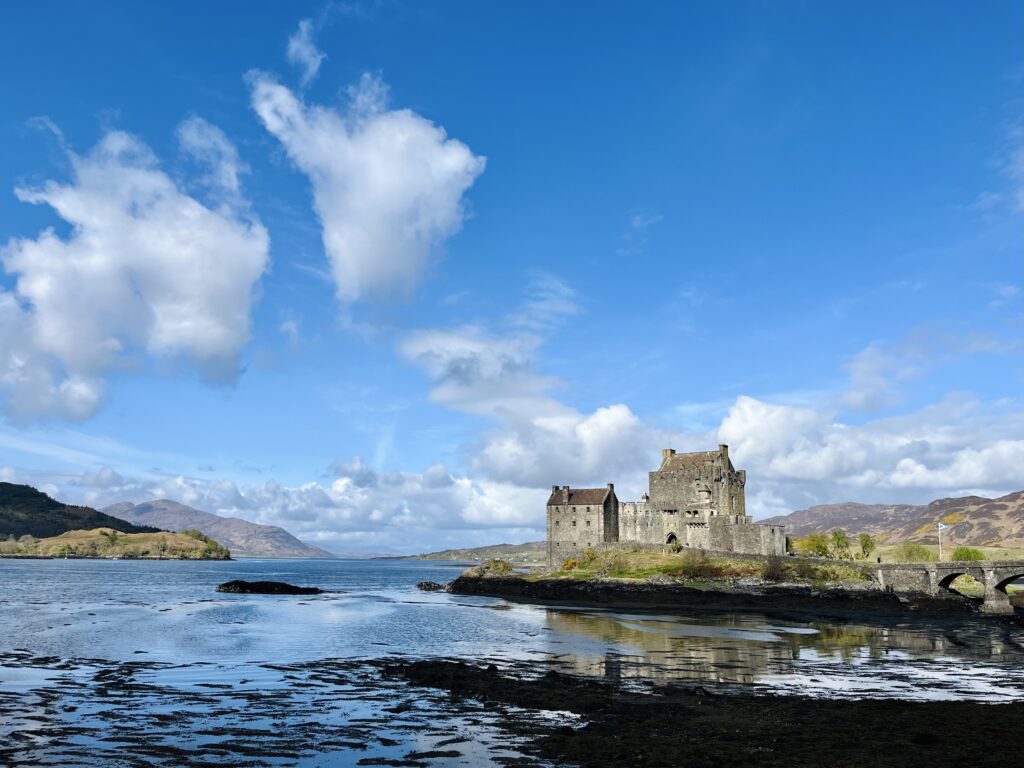
During our Scottish adventure, there was one place I absolutely had to see: Eilean Donan Castle.
Located at Dornie, Kyle of Lochalsh IV40 8DX, this castle sits where three lochs meet – Loch Duich, Loch Long, and Loch Alsh – giving it a magical, floating-on-water appearance. Connected by a charming stone bridge, it truly feels like something out of a fairytale.
In fact, I’d heard it’s often called the most photographed castle in the UK. Its image appears on postcards, calendars, travel guides, and even film posters – I felt like I had seen it a hundred times before arriving!
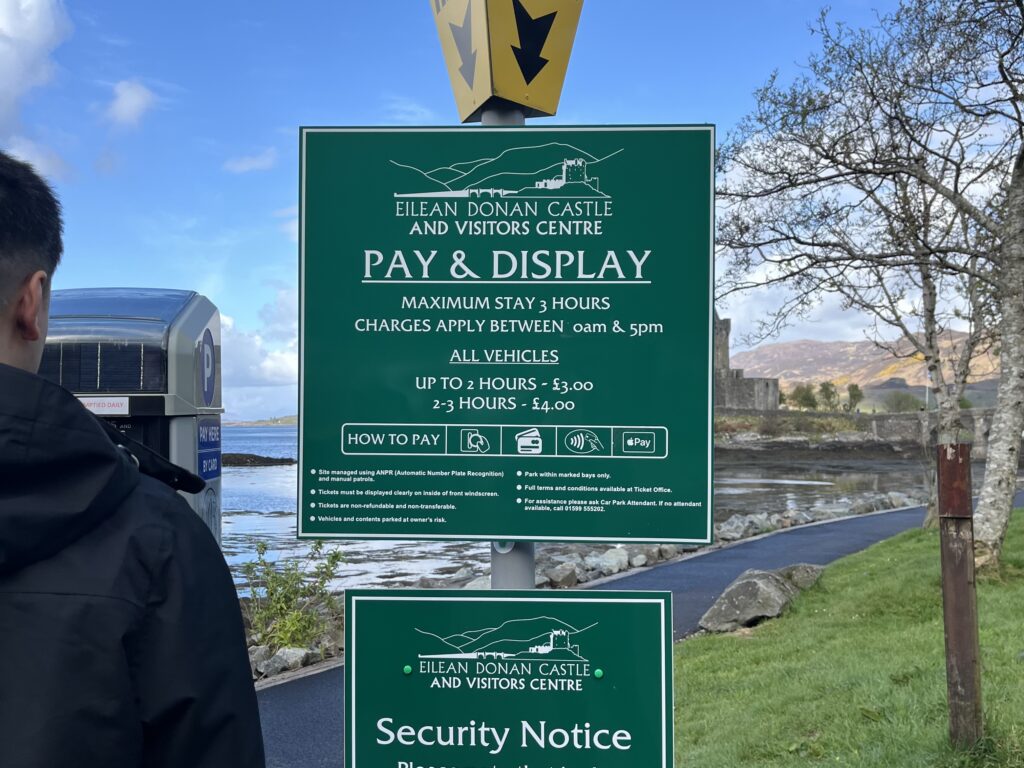
We left Inverness at 7 AM and arrived around 9 AM. Even from the car park, I couldn’t stop snapping photos – the view was breathtaking. Parking is paid: £3 for up to 2 hours and £4 for 3 hours. We found 2 hours plenty of time.
On a lighter note, my little one, Soju, still can’t tie his shoelaces, so we ended up doing it for him every day during the trip. He had these new walking boots, and I half-wondered if I should have bought velcro shoes instead – the joys of travelling with kids!
Why Eilean Donan is So Photogenic
Three lochs converging, the castle standing proudly on its own island, and the stone bridge – the combination is cinematic. Unsurprisingly, the castle has appeared in films from 007 to Highlander and even Bollywood productions.
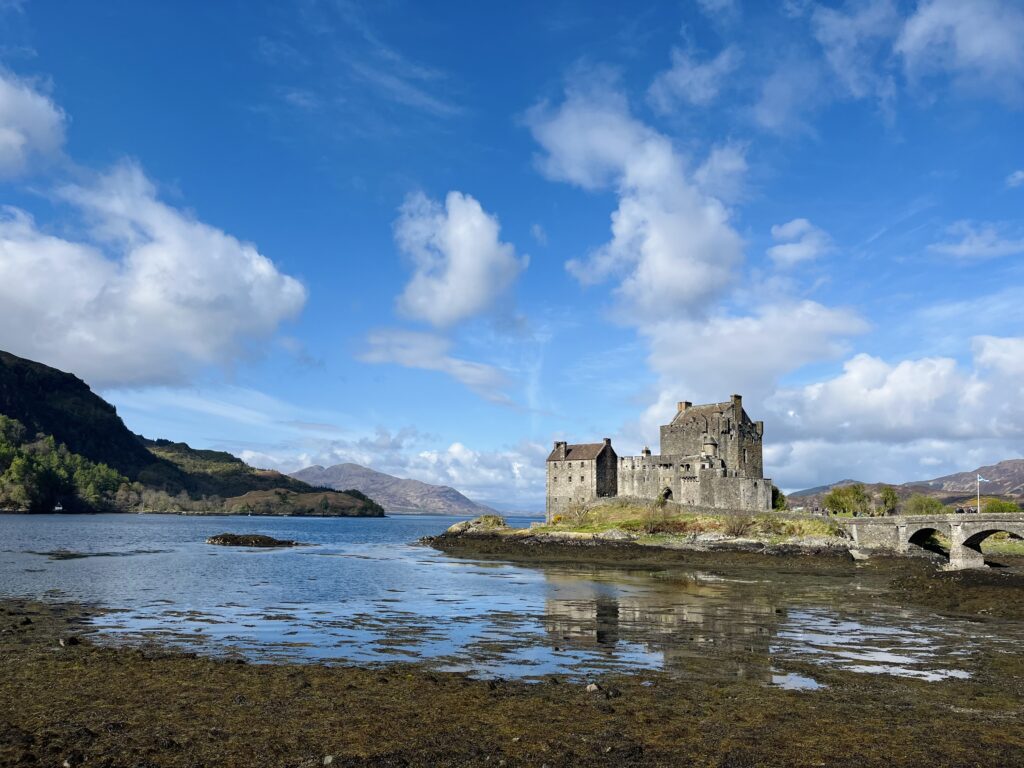
The castle transforms throughout the day: pink misty mornings, vibrant greenery against grey stone walls at noon, fiery sunsets, and sparkling lights at night. Scotland’s famously changeable weather only adds to its charm, keeping photographers and travellers coming back again and again.
A Glimpse into the Castle’s Dramatic History
The castle’s story is as captivating as its views:
- Name Origin: “Eilean Donan” literally means “Island of Donan,” named after a 6th–7th century Irish monk who supposedly founded a monastery here.
- 13th Century: Constructed between 1214–1249 during Alexander II’s reign to defend against Viking raids, later becoming a stronghold of the Mackenzie clan. Medieval tales even speak of hanging rebels from the walls.
- 1719 Destruction: During the Jacobite rising, Spanish troops occupied the castle. The British navy bombarded it, destroying it completely. This was the last recorded naval attack on a Scottish stronghold.
- 20th Century Revival: In 1911, Major John MacRae-Gilstrap purchased the ruins and spent over 20 years restoring it meticulously, incorporating a memorial for World War I soldiers.
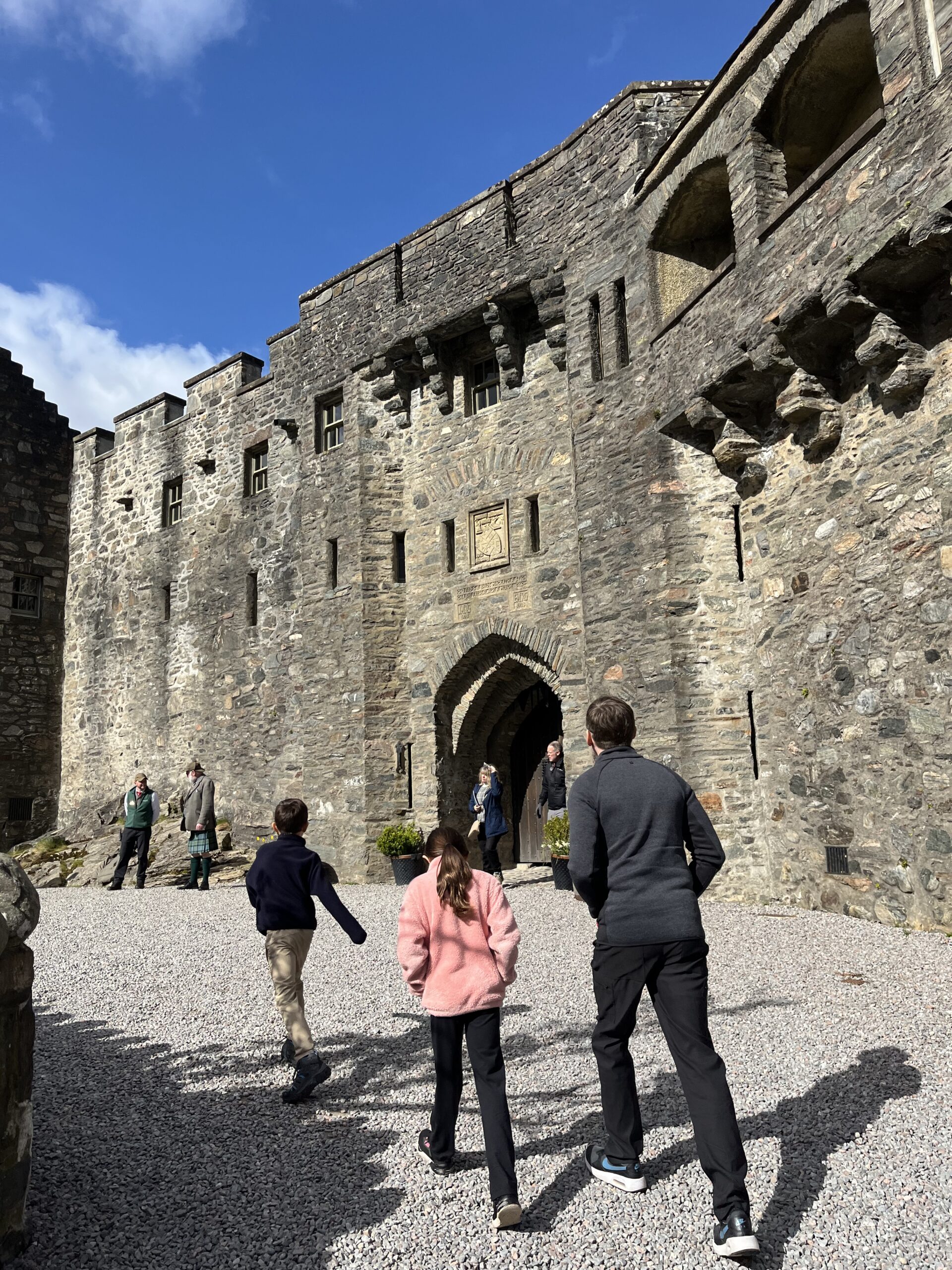
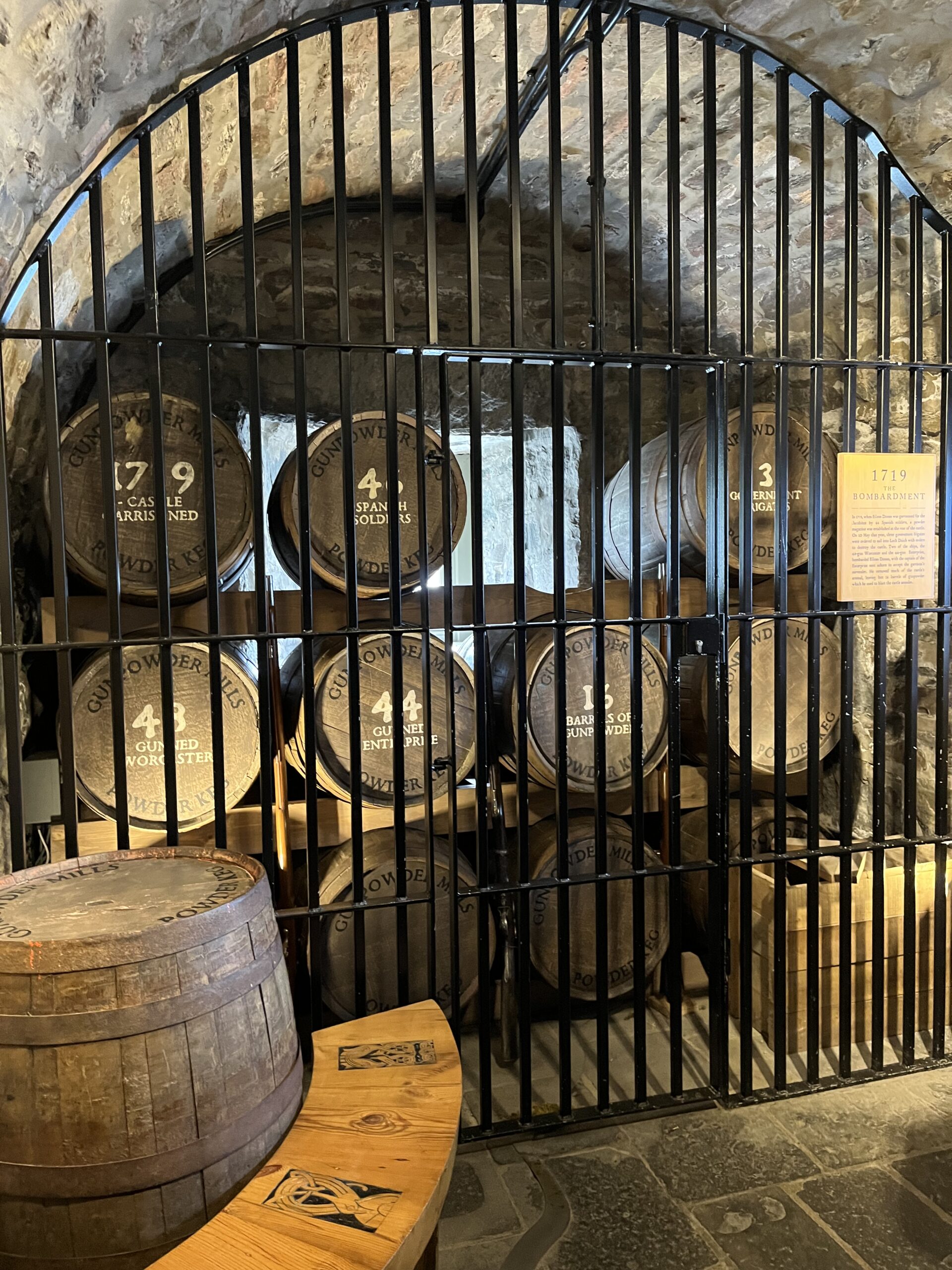
Walking around before entering, I couldn’t believe this castle was once reduced to rubble. Today, it stands as a symbol of resilience, heritage, and devotion to family roots.
Exploring Inside
Inside, photography isn’t allowed, but here’s a brief overview:
- Billeting Room: The restored barracks with barrel-vaulted ceilings blending medieval and modern elements.
- Banqueting Hall: A grand hall with North American pine ceilings, a fireplace, and clan crests.
- Jacobite Room & Armoury: Dedicated to the Jacobite Rising, displaying swords, spears, and armour – a haven for history buffs.
Tickets can be bought at a kiosk or the ticket office. Operating hours are March–December, 10 AM to 5 PM. Prices are as follows:
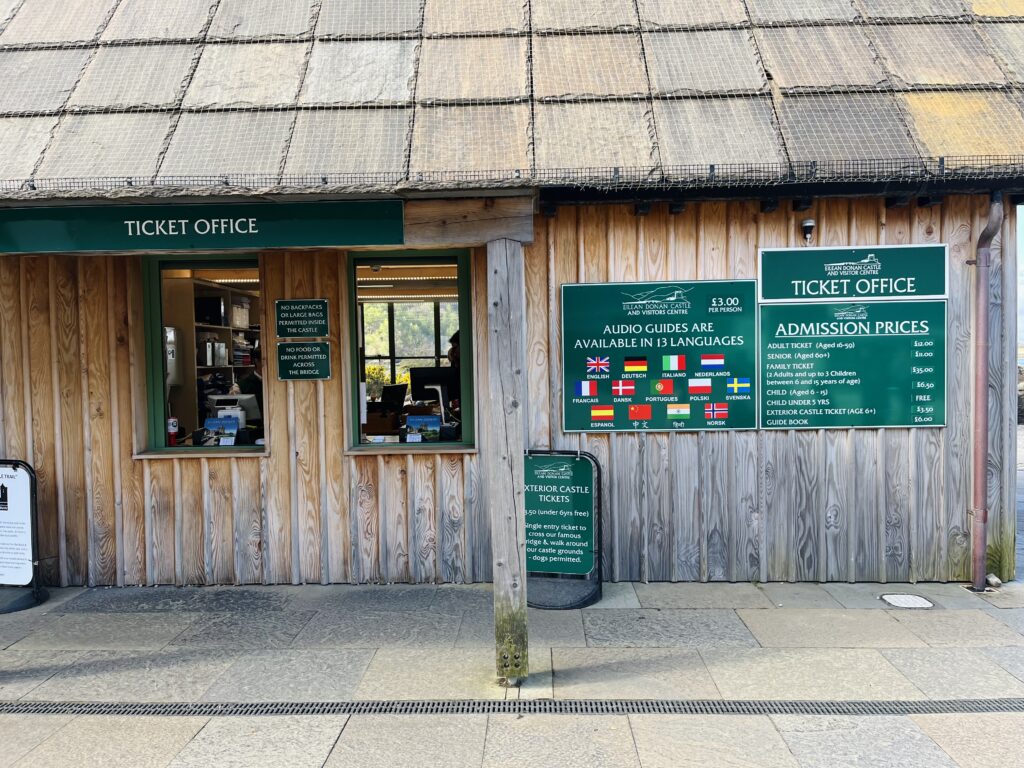
- Adults (16–59): £12
- Seniors (60+): £11
- Family (2 adults + 3 children): £35
- Children (6–15): £6.50, under 5 free
- Exterior-only ticket: £3.50
Interactive Stories & QR Codes
As you wander the castle, you’ll spot black-and-white shield-shaped QR codes. Each links to one of 20 stories, covering castle history, Scottish legends, and local wildlife. Scanning them feels like following a storybook rather than just using an audio guide – we loved it!
Family Fun & Scenic Views
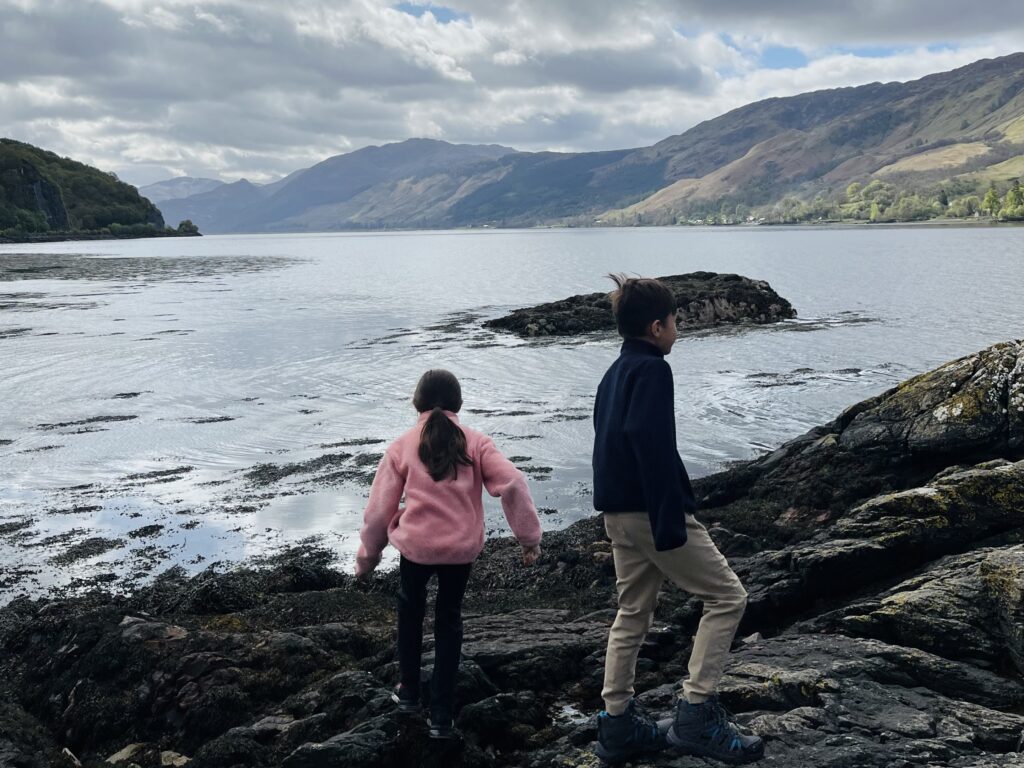
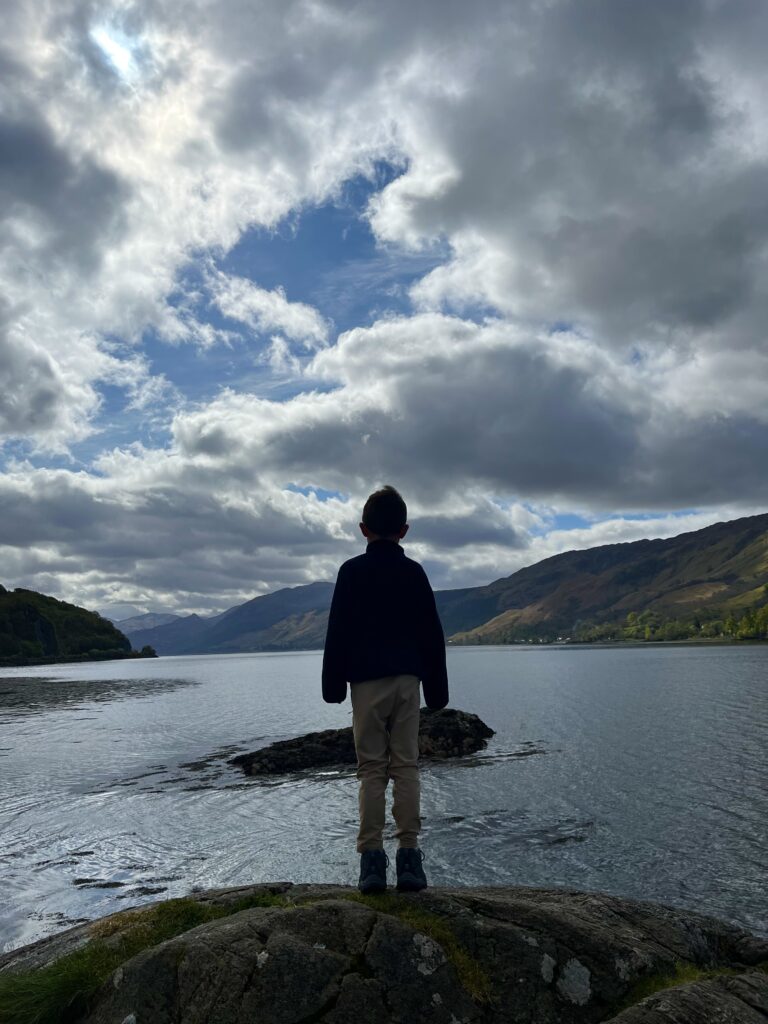
Soju and Kimchi loved climbing the rocks, and my husband and I got some lovely family photos. The castle grounds are also home to a World War I memorial, reminding visitors of the sacrifices that make our safe lives today possible. Look carefully around the lochs, and you might even spot otters, seabirds, or the occasional dolphin.
Scottish Mermaids & Legends
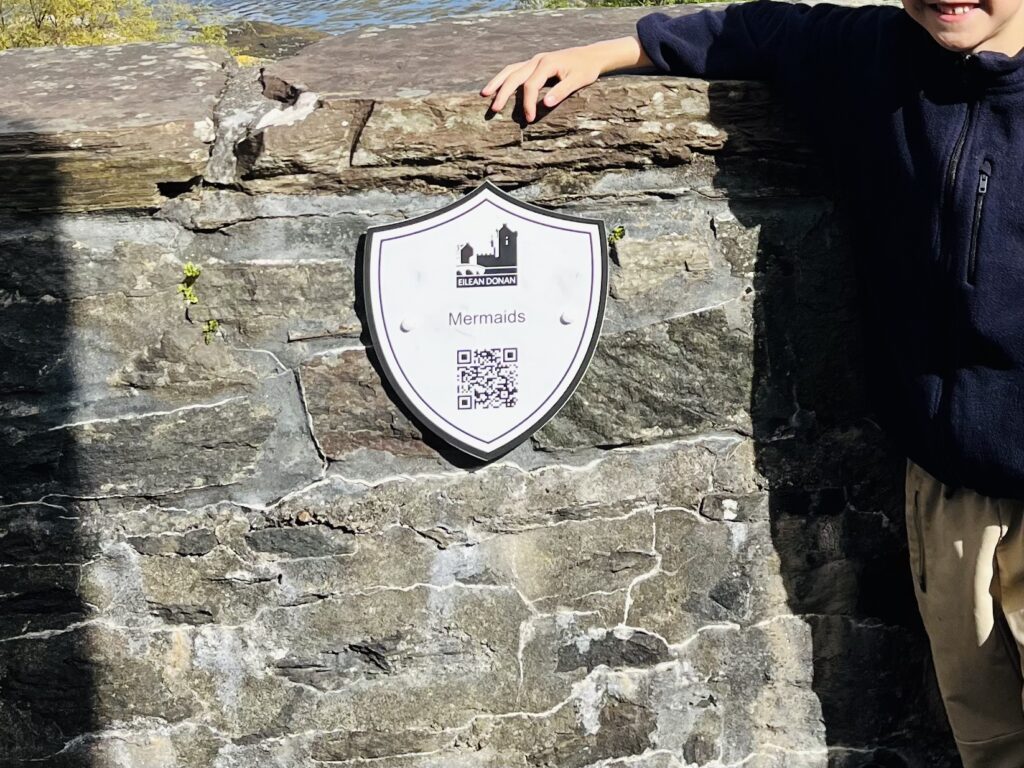
One QR story told of the Scottish mermaid, Maighdean Mhara or The Ceasg, with a human upper body and the tail of a young salmon. Learning these local myths added another layer of magic to the castle experience.
Final Thoughts
We originally planned to just peek at the castle from the outside, but its beauty pulled us inside. Wandering the halls, reading about its history, and soaking in the views of the blue lochs and gently swaying trees felt like living in a movie. Everywhere we turned, it was postcard-perfect. Every breeze, every view, every quiet moment became a treasured memory. I cannot recommend a visit here enough – put Eilean Donan Castle firmly on your Scottish bucket list!
Tip: Arrive early to avoid crowds and enjoy the full magical lighting throughout the day.