
Part 2. The Darker Side of Edinburgh Castle: From Military Prison to War Captives
The Military Prison
Just a few steps away from the Crown Jewels, the atmosphere changes completely.
Here stands Edinburgh Castle’s Military Prison, a small yet strikingly strict world of its own.
Built in 1842, it was used to discipline soldiers who broke military regulations — offences like drunkenness on duty, insubordination, or absence without leave. It sounds harsh now, but back then, discipline was everything.
Inside, the stone cells are narrow, the air heavy.
There’s even a preserved treadmill — a grim reminder that punishment once meant labour, not rest.
It’s eerily quiet now, but the air still feels charged with the tension of soldiers who once marched these walls.
“Two Months in Solitary — for Drinking?”
Among the exhibits, one story stopped me in my tracks — that of Private Robert Ewing.
Name: Robert Ewing (aged 24)
From: Bonhill, Dunbartonshire
Regiment: 26th Cameronians
Offence: Drunk while on duty
Sentence: Two months’ hard labour + two months in solitary confinement (July 1844)
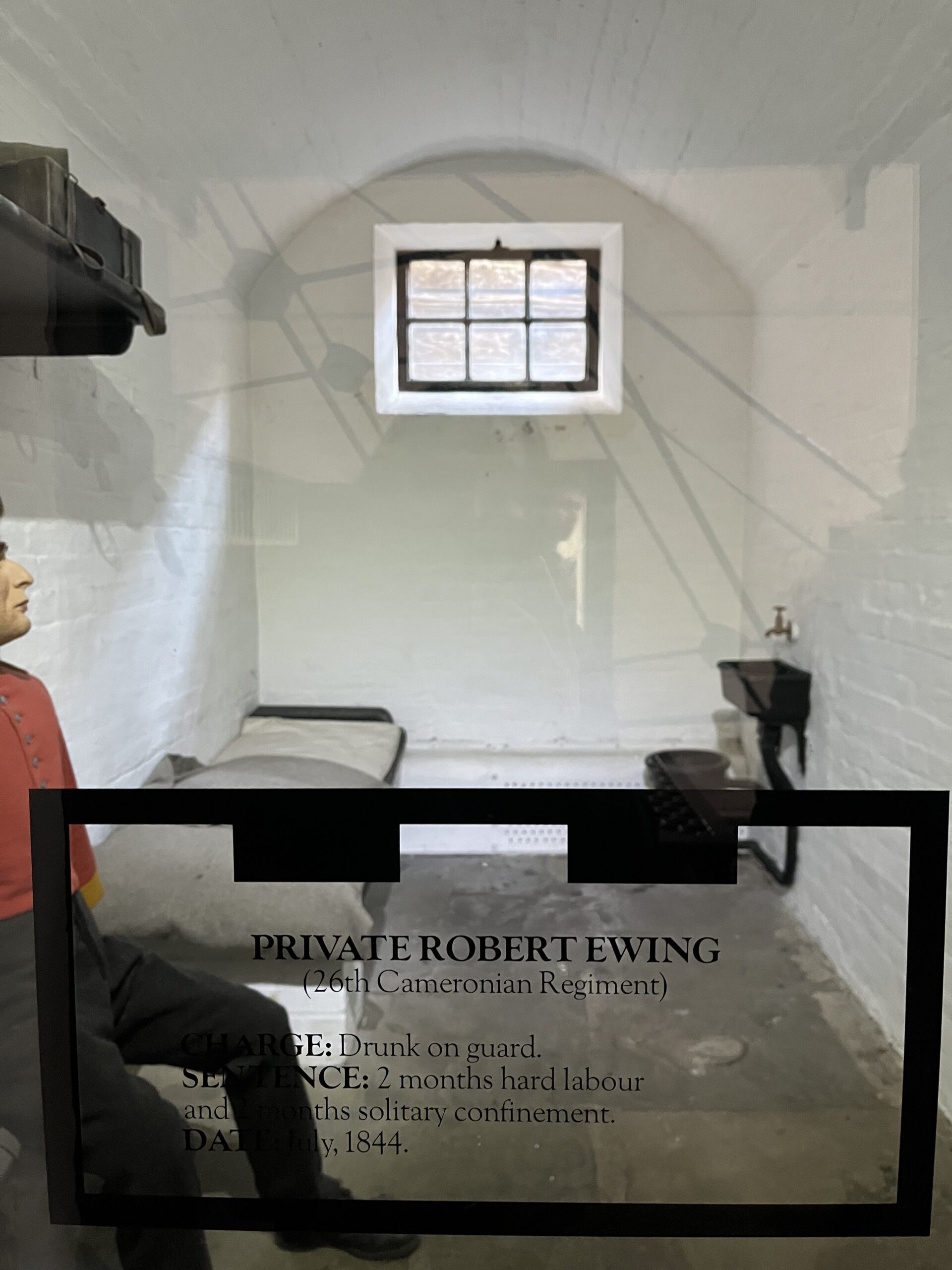
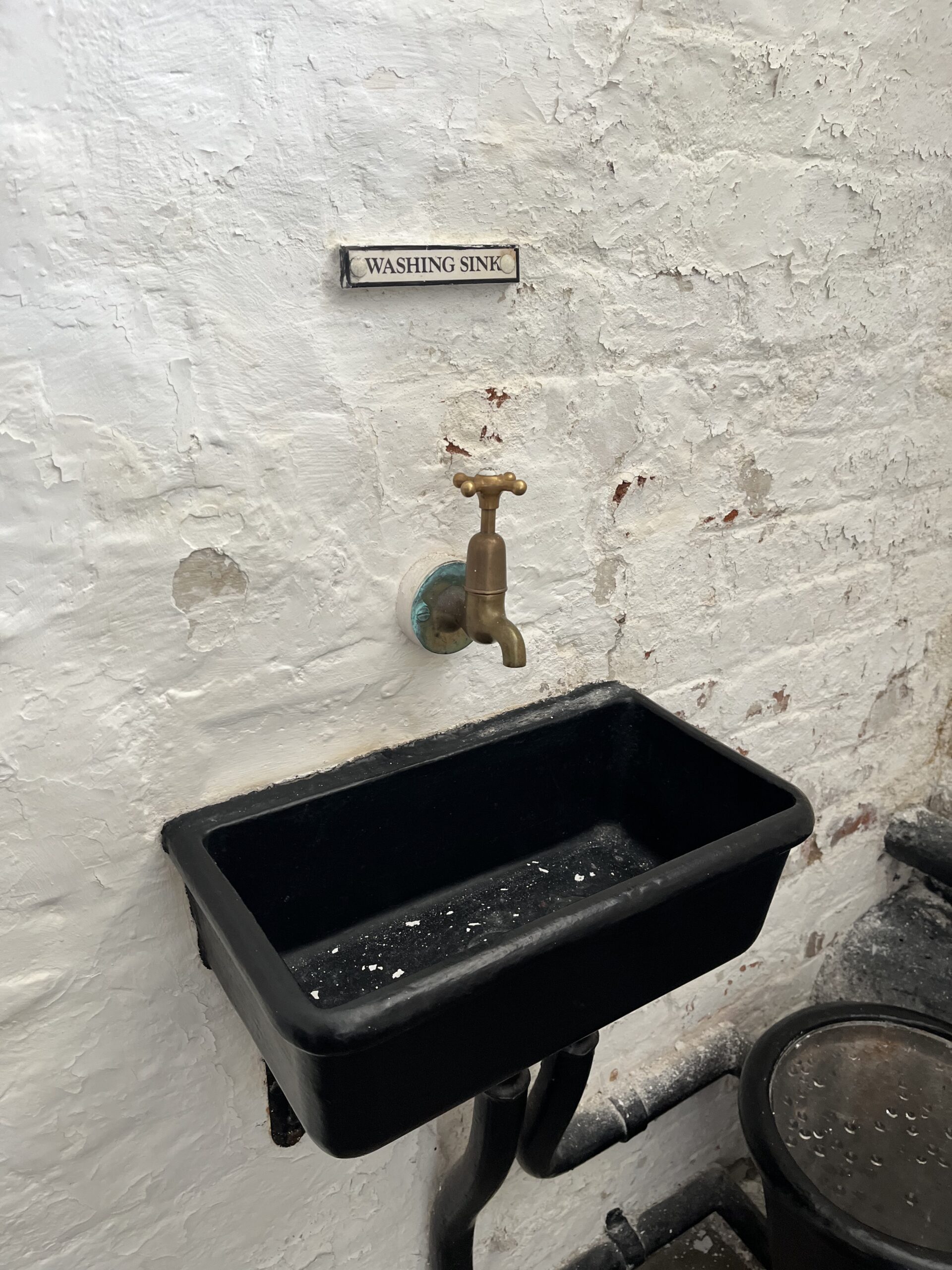
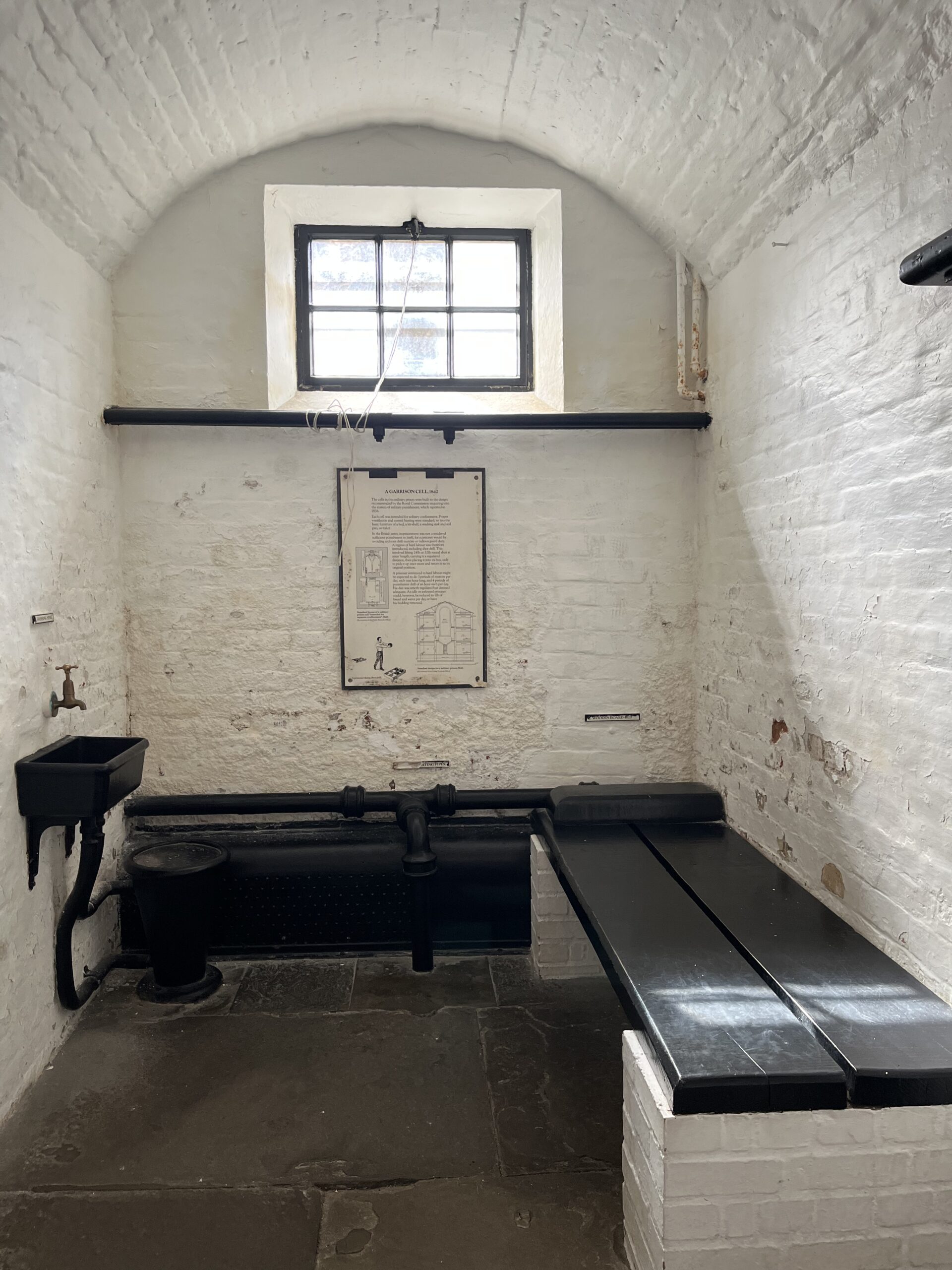
Private Ewing’s punishment wasn’t just a few days in the cell.
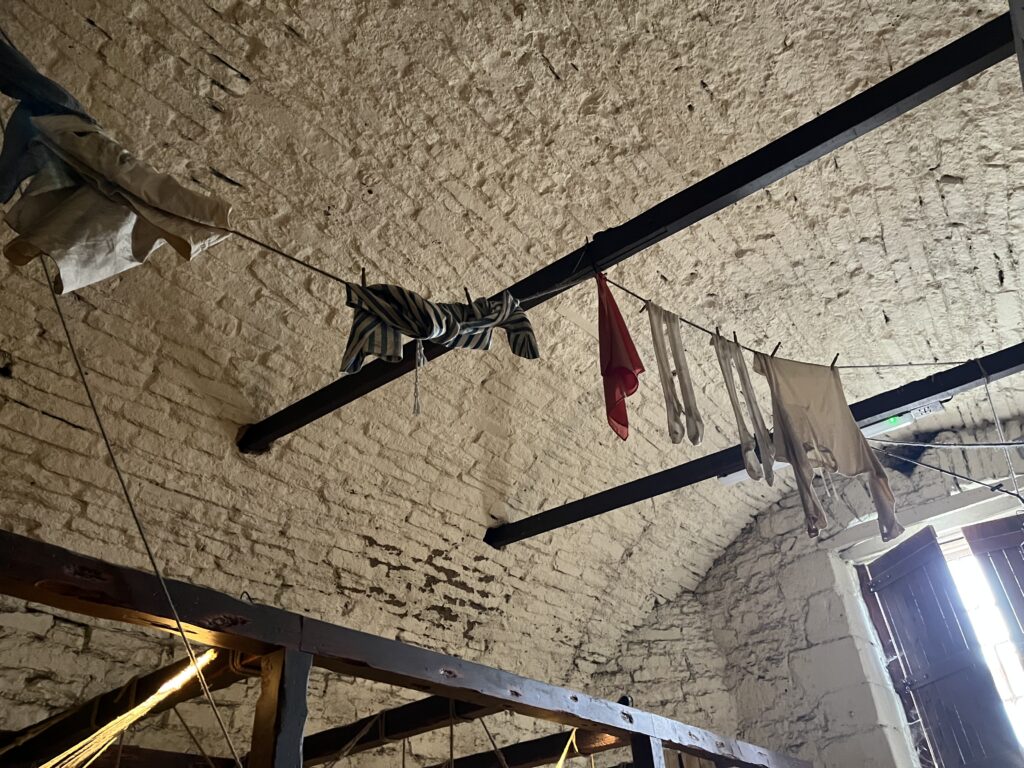
He was forced to spend hours unravelling thick, tar-stained ropes by hand — part of his hard labour.
Other prisoners broke stones, scrubbed yards, or ran on the spot under the blazing sun.
But here’s the twist:
Ewing wasn’t just a troublemaker.
After serving his sentence, he continued in the army for another 21 years, serving in India, China, and Bermuda, eventually receiving commendations for good conduct.
When I read that, Kimchi looked up at me and said quietly,
“Mum, maybe he just had a really bad day.”
Exactly. Even soldiers have bad days — some just got caught.
The Prisons of War
Descending into the lower chambers of Edinburgh Castle feels like stepping into another world.
The air turns colder, the stone walls damp.
While the royal apartments above glitter in daylight, down here you feel only shadows — and the ghosts of history
From Pirates to Prisoners
The story begins in 1758, when French privateer sailors — essentially licensed pirates — were captured during the Seven Years’ War and brought to the Castle.
From then on, its underground vaults became the holding ground for hundreds of prisoners from across Europe.
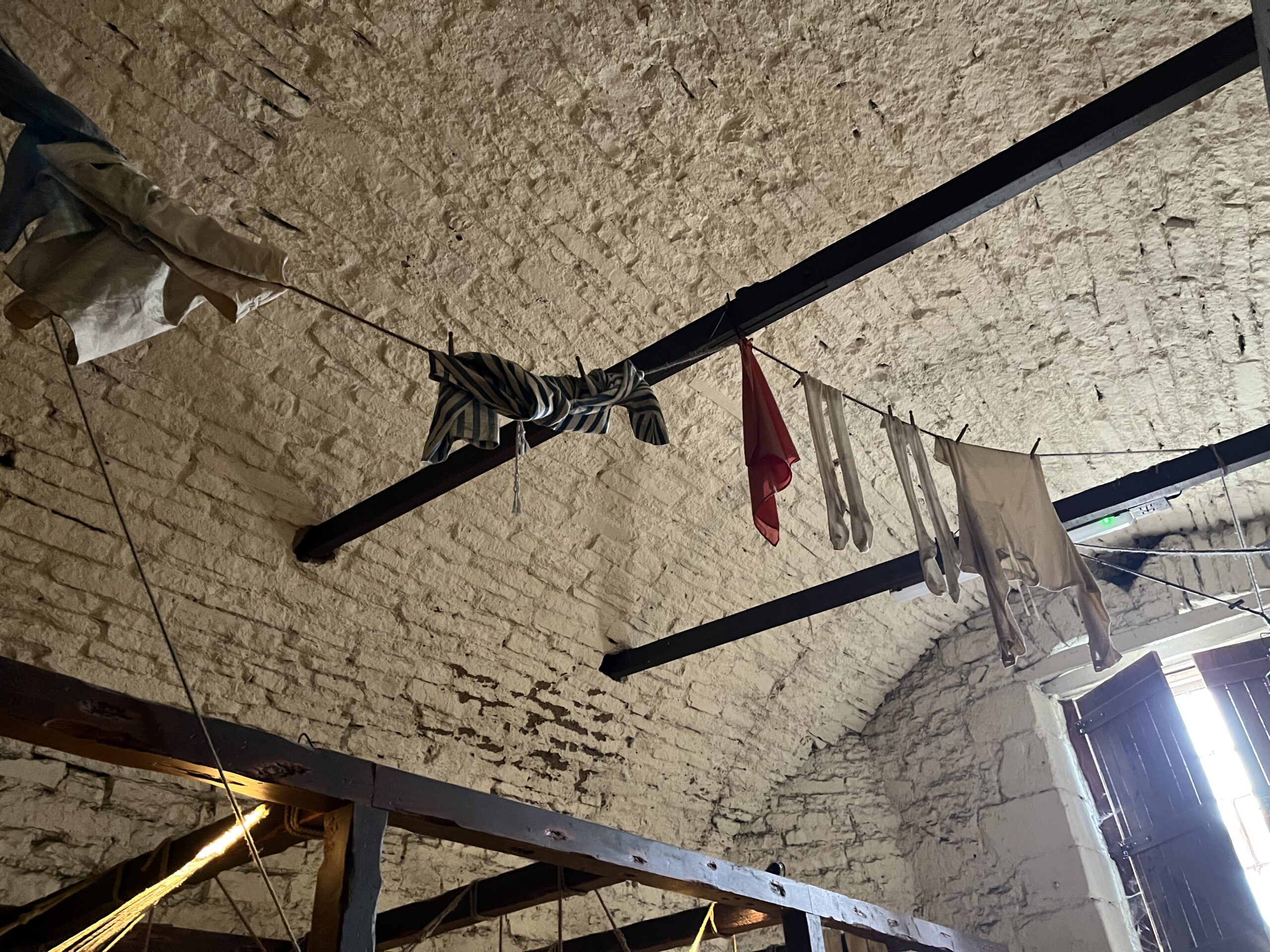
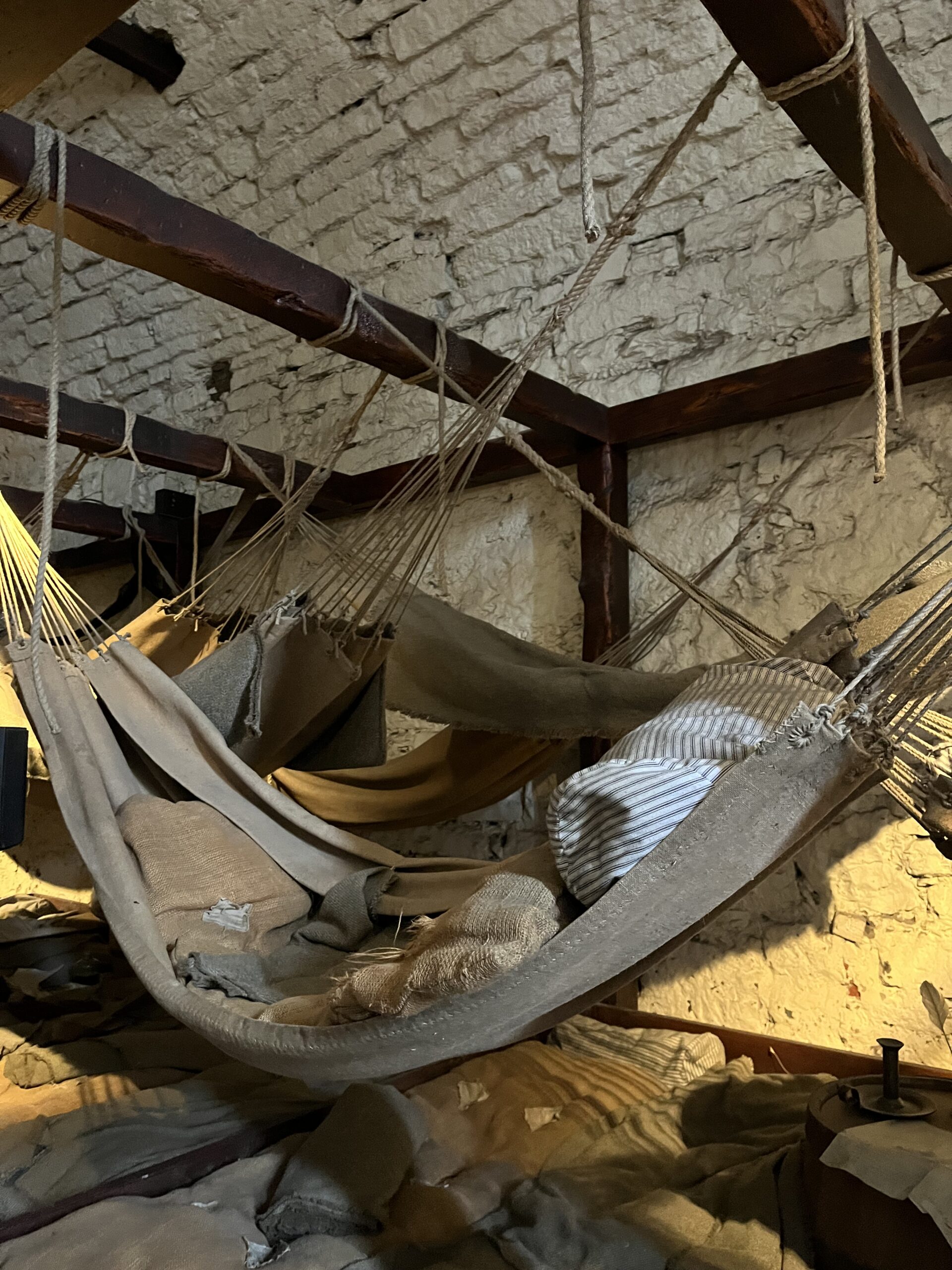
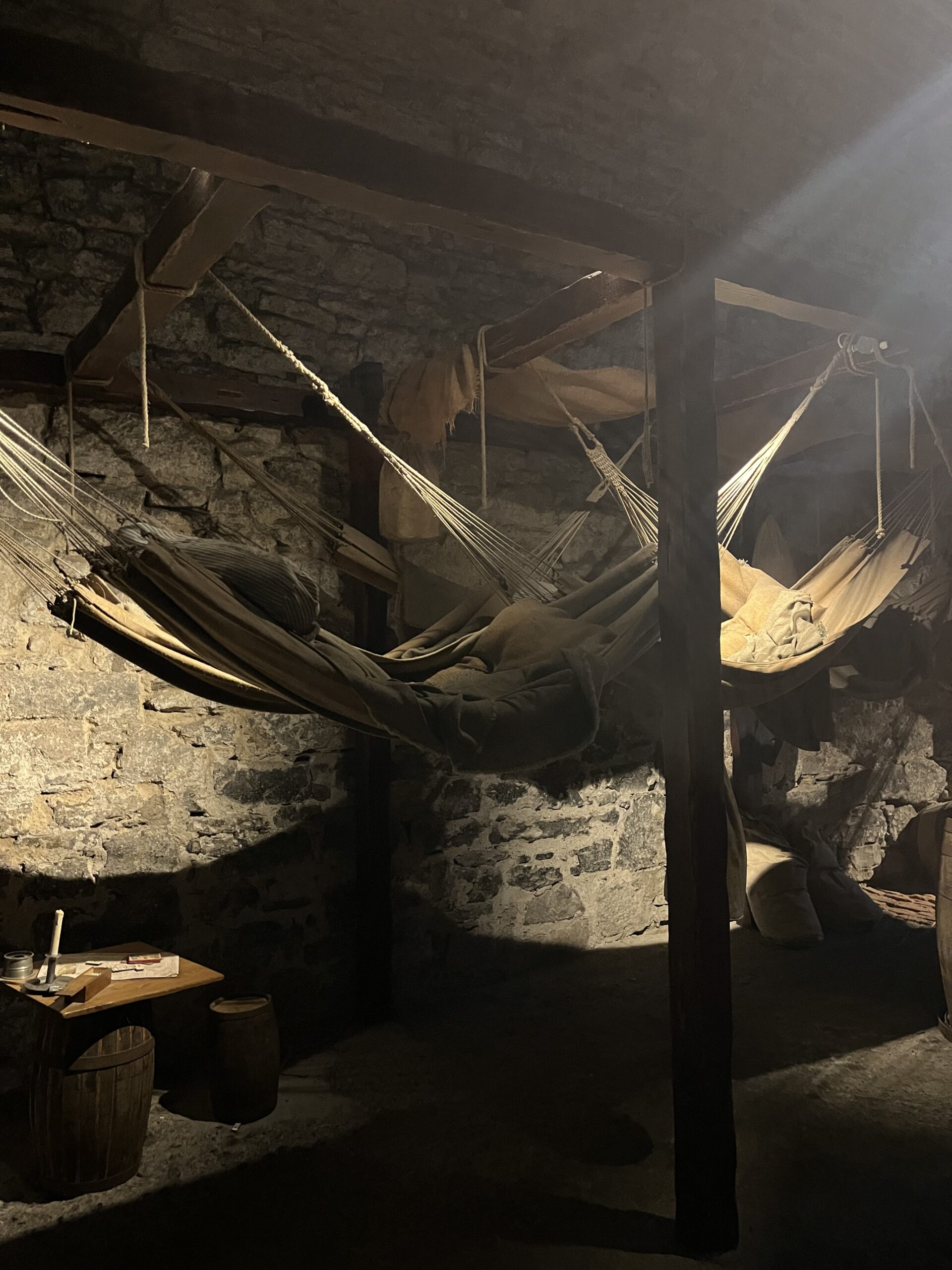
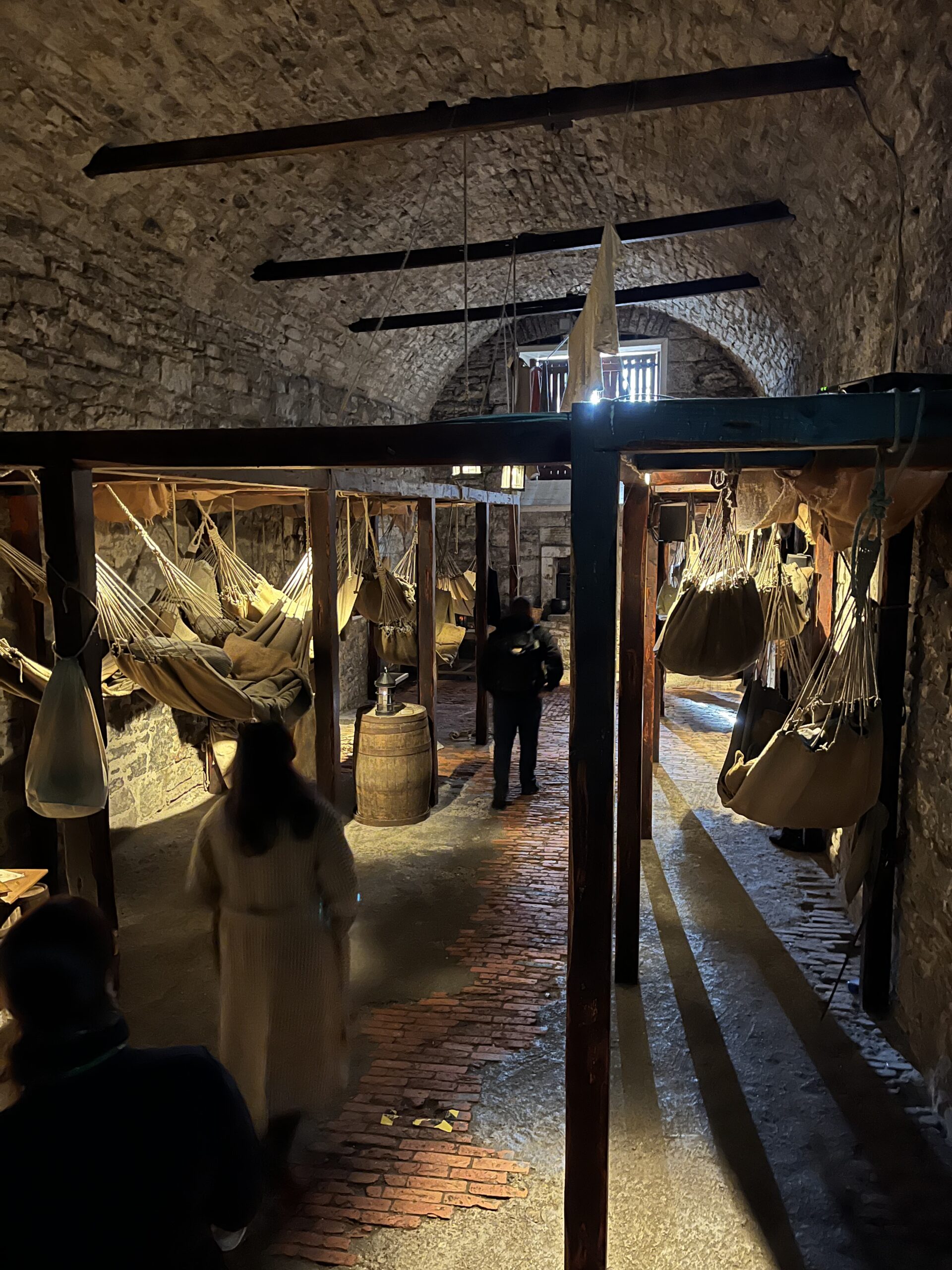
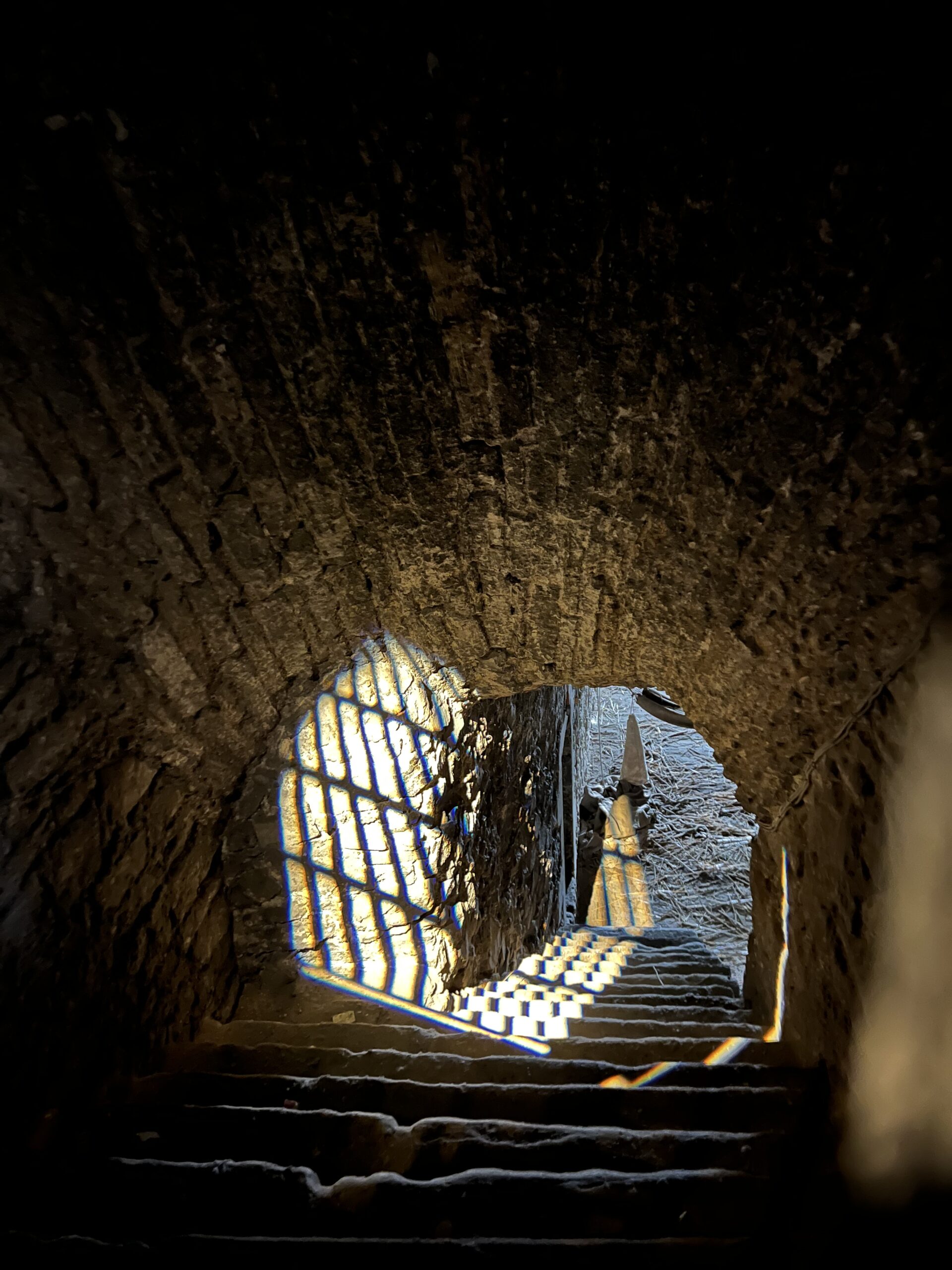
In 1805, during the Battle of Trafalgar, even a five-year-old drummer boy was taken captive and imprisoned here.
When Soju heard that, his little face froze.
“That’s so sad… he was my age.”
Yes, history isn’t always about kings and glory. Sometimes it’s about children who never got the chance to grow up.
The Scratch of Freedom
During the American War of Independence (1775–1783), captured American sailors were held here too.
One of them scratched an early version of the Stars and Stripes flag into the wooden prison door.
That faint carving is still visible today.
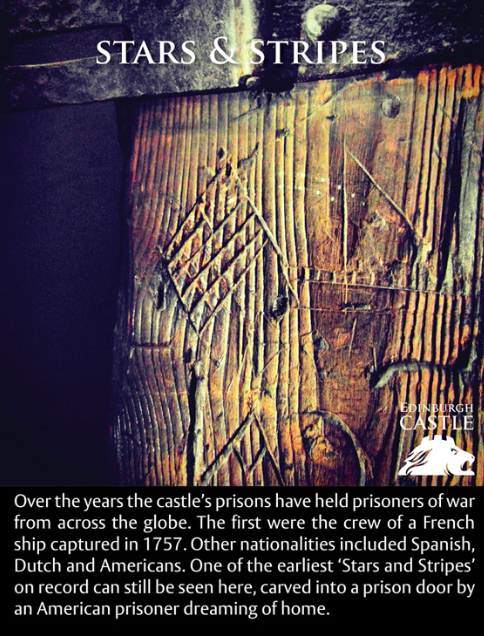
Standing before it, I felt a lump in my throat.
It wasn’t just graffiti — it was defiance.
A silent statement: We were here, and we still believe in freedom.
The Great Escape Attempt
Life in these dungeons was brutal — overcrowded, damp, foul-smelling, and rife with disease.
Yet hope, somehow, survived.
In 1811, forty-nine prisoners tried to escape by digging a hole through the castle wall.
All but one were caught, yet the tiny hole they made still remains.
When Kimchi saw it, she whispered,
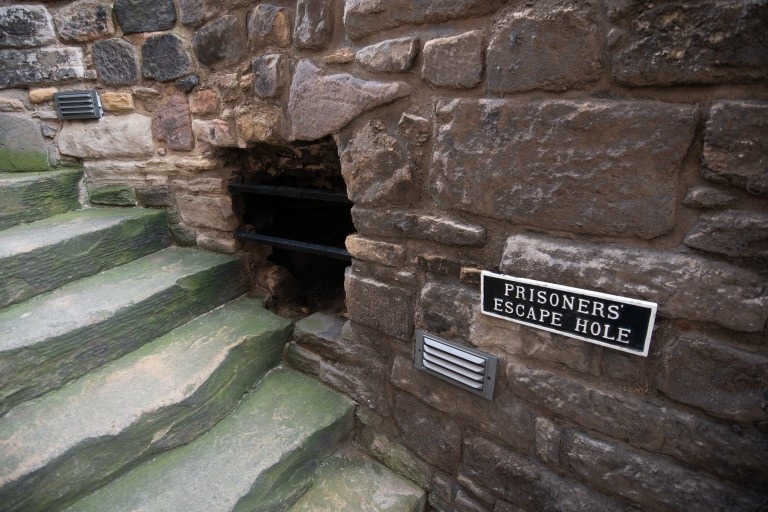
“Mum, I think they really believed they could make it.”
And that’s what moved me most — the sheer stubborn hope of being human.
Prison Crafts
Even in captivity, creativity found its way through.
Prisoners made beautiful crafts from whatever materials they could find — bone, straw, wood.
They carved miniature ships, built chess sets, and even wove needle cases from straw.
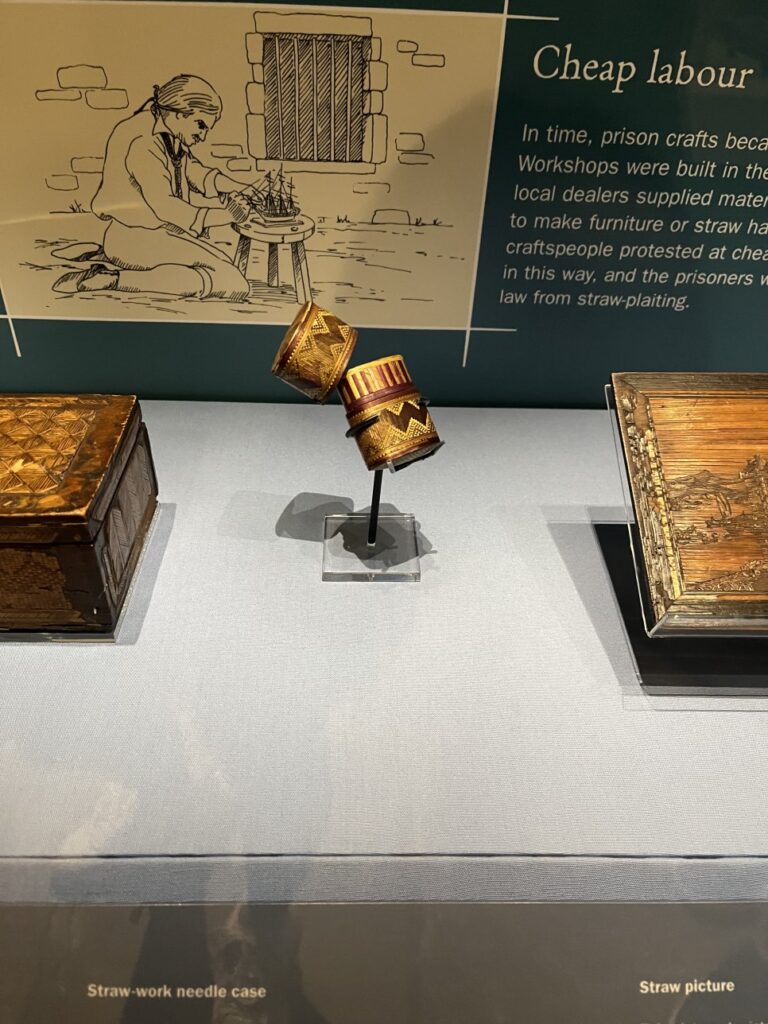
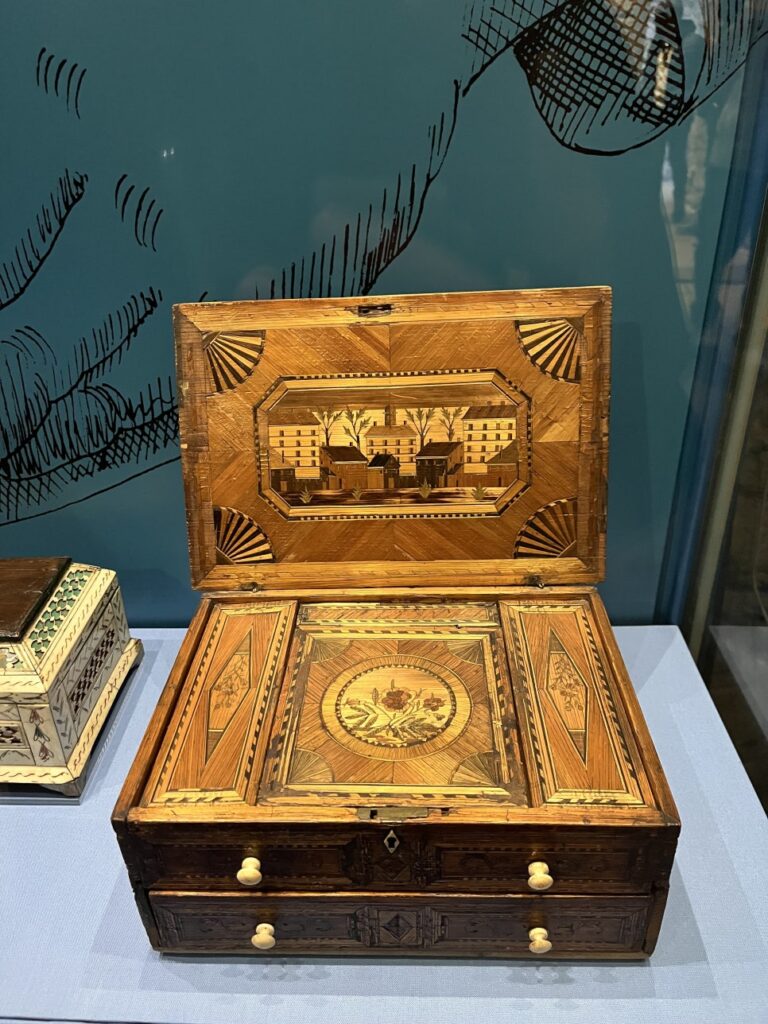
One of them, a delicate straw needle holder, caught my eye.
It wasn’t just an object — it was a heartbeat.
Proof that even behind bars, people refused to stop creating, imagining, living.
Edinburgh Castle: More Than a Royal Story
Most visitors stop at the royal rooms, the cannons, and the panoramic views.
But the Castle’s soul runs deeper — into the dark corners where soldiers, sailors, and strangers once waited for freedom.
This isn’t just a fortress of kings;
it’s a monument to endurance, discipline, and the unbreakable will of the human spirit.
Sources & References
- Historic Environment Scotland – The Prisons of War, Edinburgh Castle
- National Records of Scotland – Military Discipline Archives (1840–1870)
- Edinburgh Castle Official Guide (2024 Edition)
- VisitScotland – Military Heritage of Edinburgh