
[Scotland Morning Walk] Edinburgh’s Gardens, Ross Fountain & Hidden Stories on Day One

No matter when I go to sleep, my body seems to wake automatically at 6 a.m. — so, unsurprisingly, today I was up just as the city stirred. The kids, as always, were content with croissants for breakfast. I popped into a local shop and found freshly baked ones, rushed back to our lodging, and topped them with blueberries and strawberries I’d grabbed. A drizzle of maple syrup, and breakfast was done! After all, if we’re going to explore Edinburgh today, we’ve got to start with full bellies.
Strolling into Princes Street Gardens
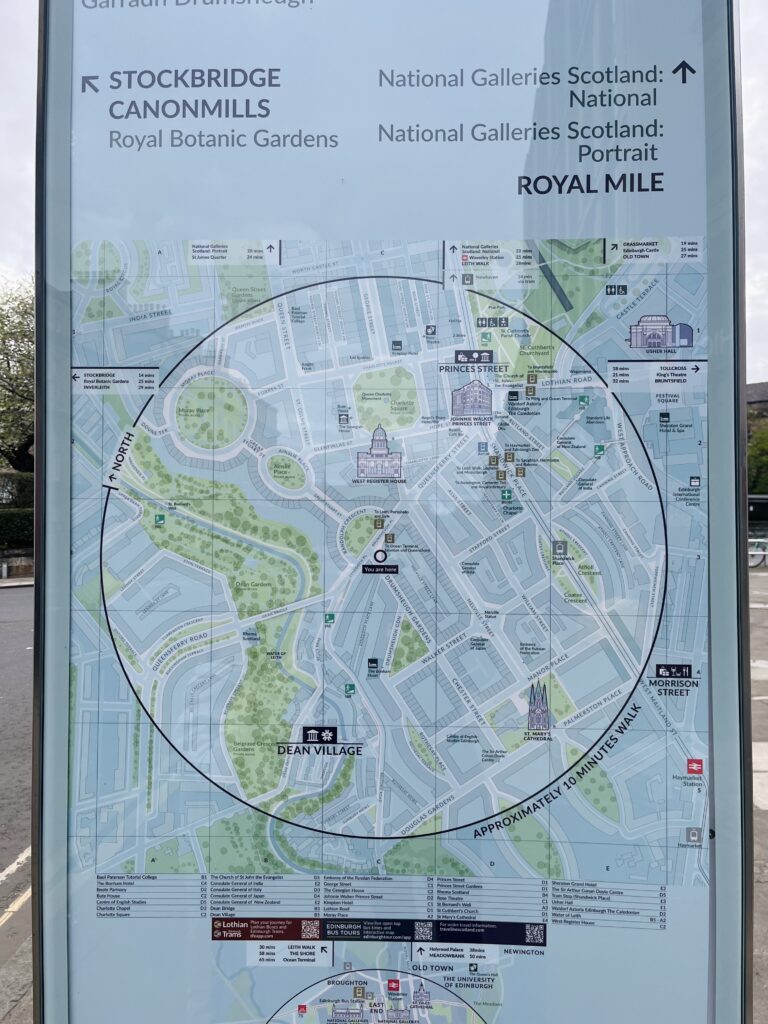
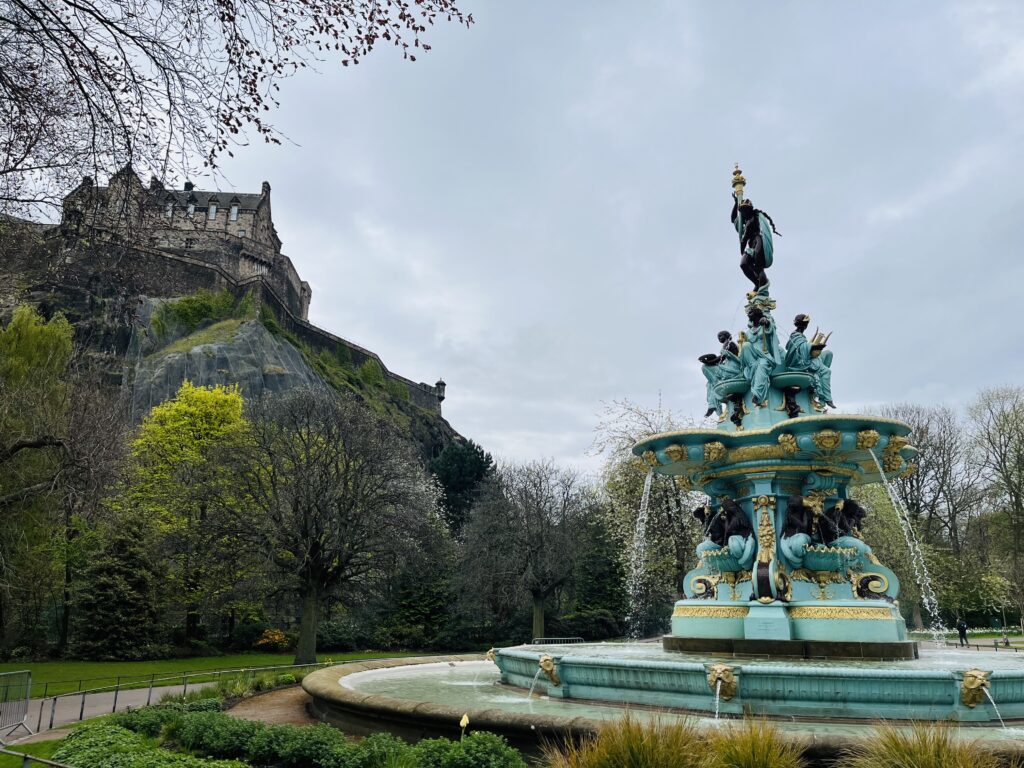
Our first stop was Princes Street Gardens, nestled between Edinburgh’s Old Town and New Town. Once the site of the Nor Loch in the late 18th century, it was drained and transformed into these gardens by around 1820. The green space lies beneath the imposing cliffs of Edinburgh Castle and offers a peaceful, historic start to the day.
The park splits east and west around an artificial hill called The Mound. We began in the west section — it’s vast, so we couldn’t see it all.
East & West Garden Highlights
East Garden: You’ll find the towering Scott Monument(climb 287 steps for city views), and the David Livingstone statuecommemorating the famous explorer. In winter, this section transforms into a festive haven — a Christmas Market with a Ferris wheel and ice rink.
West Garden: Here sits the elegant Ross Fountain, a restored mid-Victorian marvel; the Royal Scots Monument, with its modern sculptural lines; the Floral Clock, redesigned yearly using tens of thousands of bedding plants; and the Ross Bandstand, home to open-air performances and events.
The Story Behind Ross Fountain
Ross Fountain is more than just a pretty ornament — it carries stories within its curves. Crafted in France, this ornate fountain was displayed at London’s 1862 International Exhibition. Daniel Ross, a Scottish gunsmith, saw it there, fell in love, and bought it for £2,000 — then donated it to Edinburgh. By 1872, the fountain was installed in its current site.
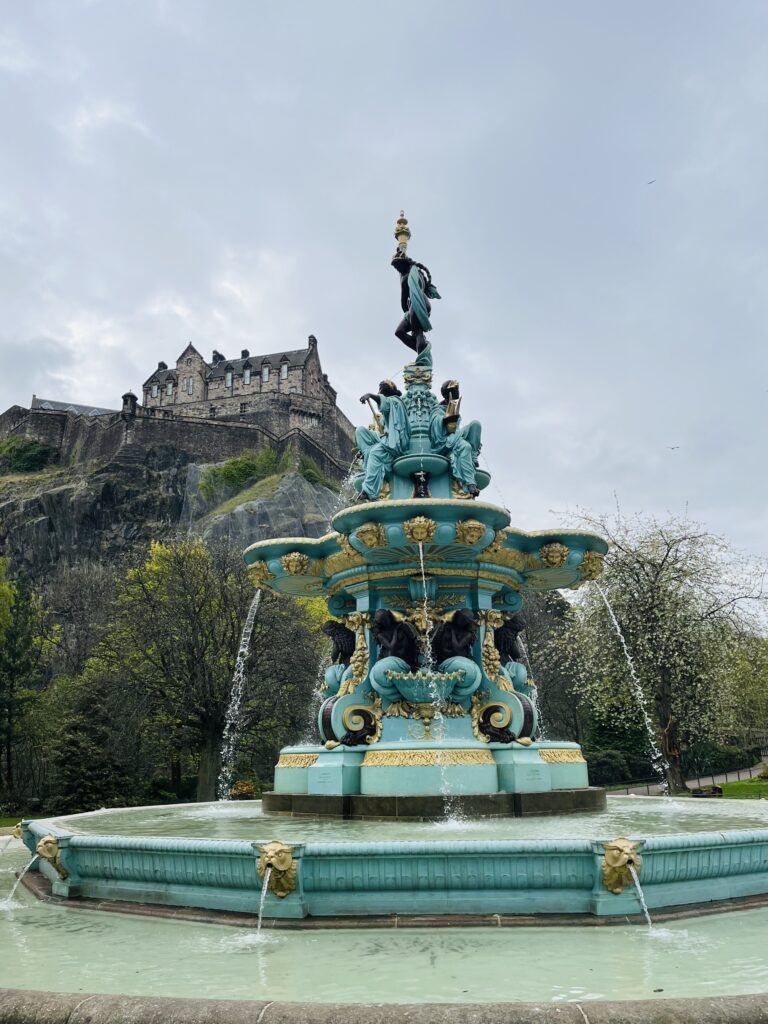
Look closer and you’ll see sculpted mermaids, hippocampi, lion heads, and four female figures atop each corner representing science, art, poetry, and industry. It was considered daring in Victorian times. Over the years, it faded and was silenced — the fountain ceased to run around 2008 due to decay. But after a major restoration starting in 2017, it was revived in 2018, with fresh colours and even LED lighting at night. Truly a reborn symbol of Edinburgh’s dedication to art and heritage.
Watching it, I felt the city’s heart beat through past and present, art and care. This was not just a monument but a story — of a person, a city, and a gift.
Walking, Play & Quiet Surprises
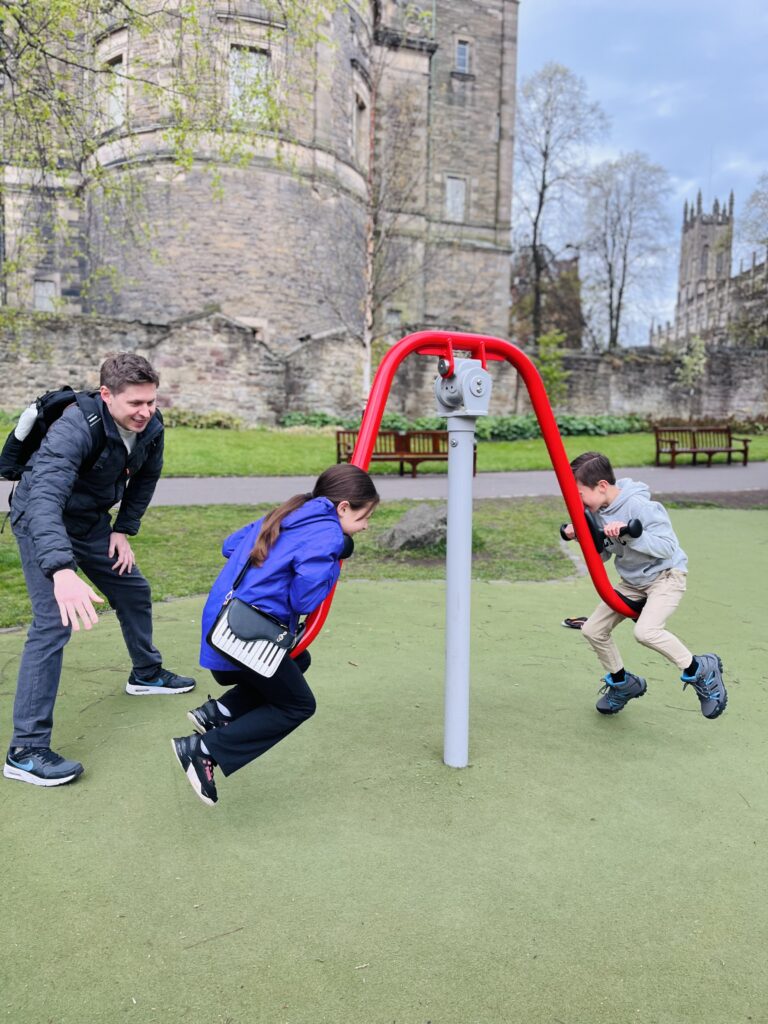
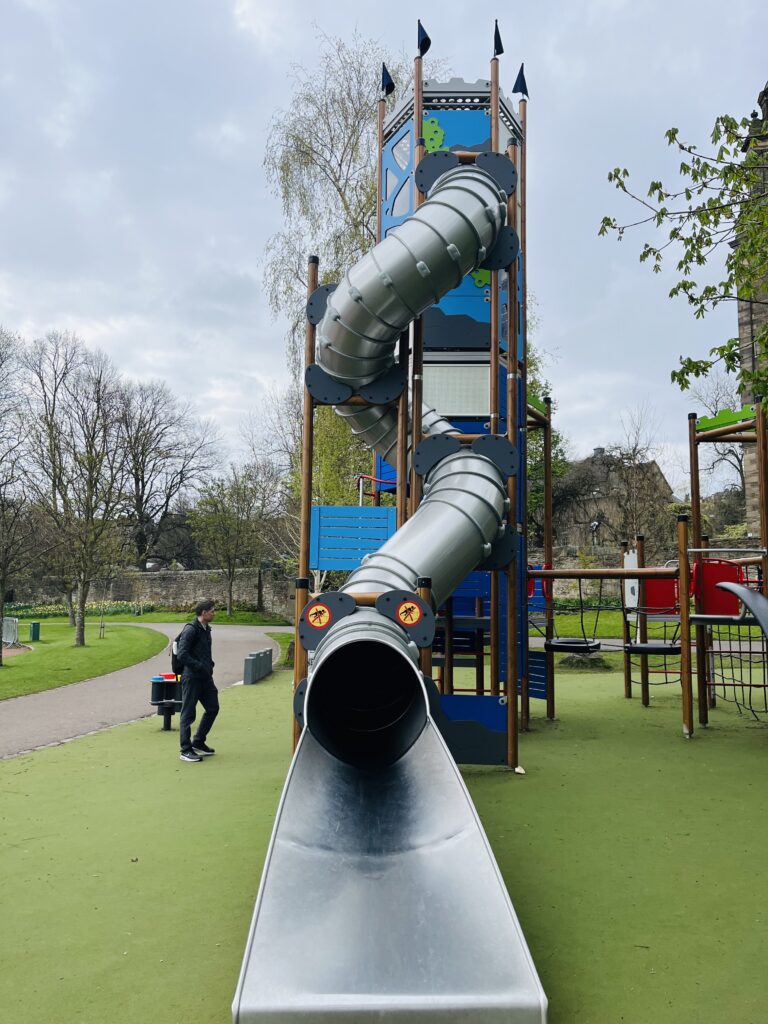
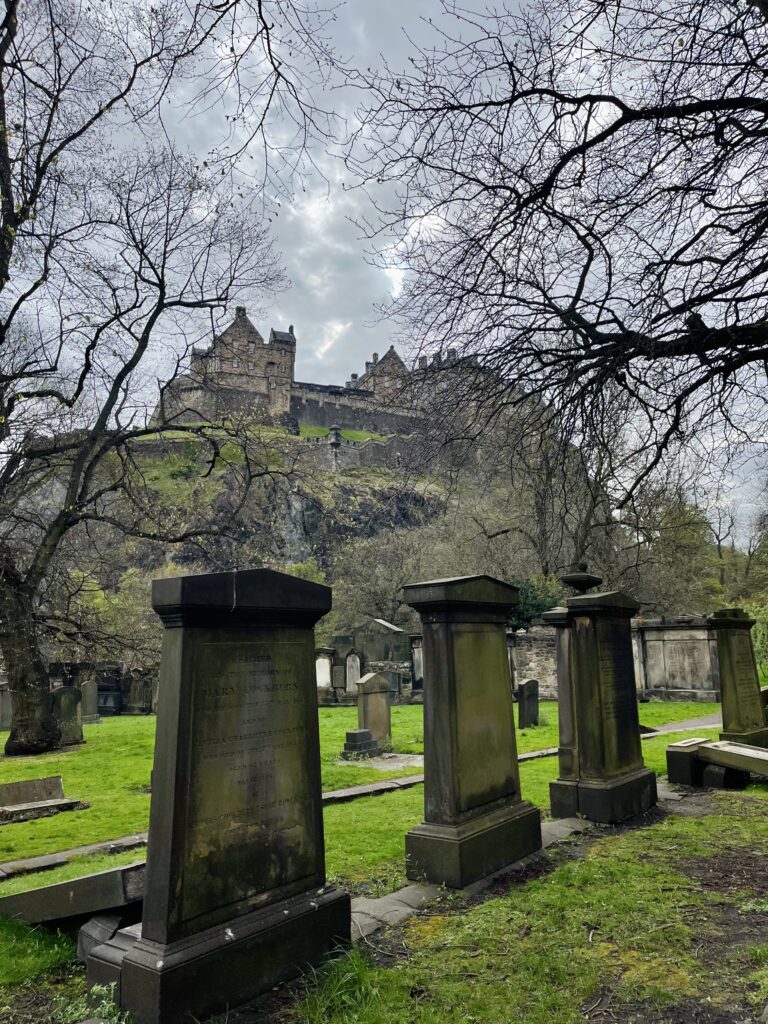
From the fountain, we paused to admire the castle peeking over the gardens, then wandered toward a children’s play area. The kids dashed ahead — Chloe zooming down slides, Rio doing his “superman jump.” It took some coaxing, but eventually we encouraged them onward; the day’s schedule was eager for us.
While walking, I spotted a Celtic-style monument dedicated to Dean Ramsay, a 19th-century cleric known for combining humor and spirituality. The cross design caught my eye; with Edinburgh Castle faintly visible behind it, the photo moment was perfect.
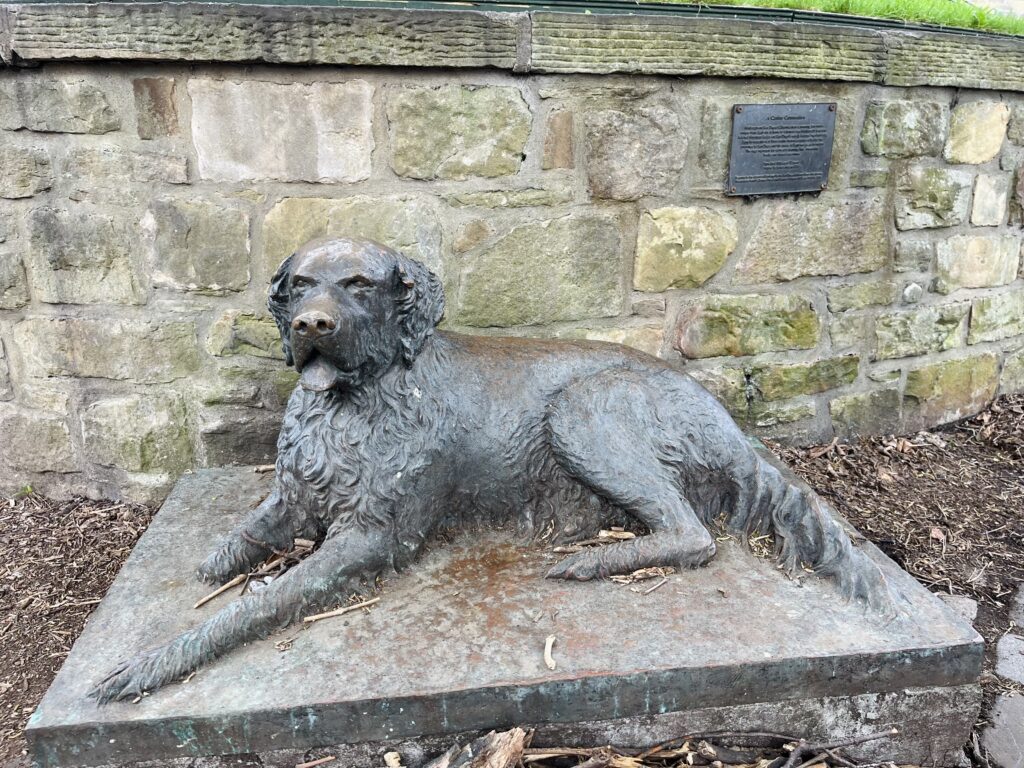
Further along, near St John’s Church, there’s a small graveyard and garden. But what made me stop was a little sculpture of a dog named “Bum the Dog.”He was a beloved stray in San Diego, and when Edinburgh and San Diego became sister cities, this dog was honoured here. Visitors leave small tokens at his base — a tribute of friendship across continents.
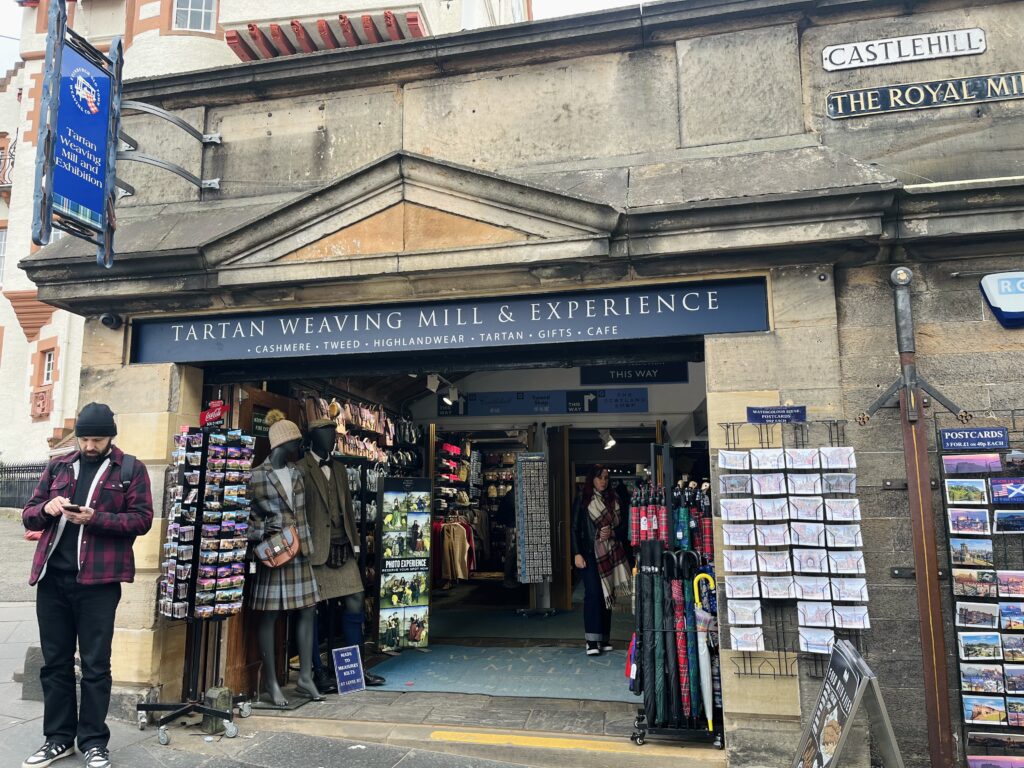
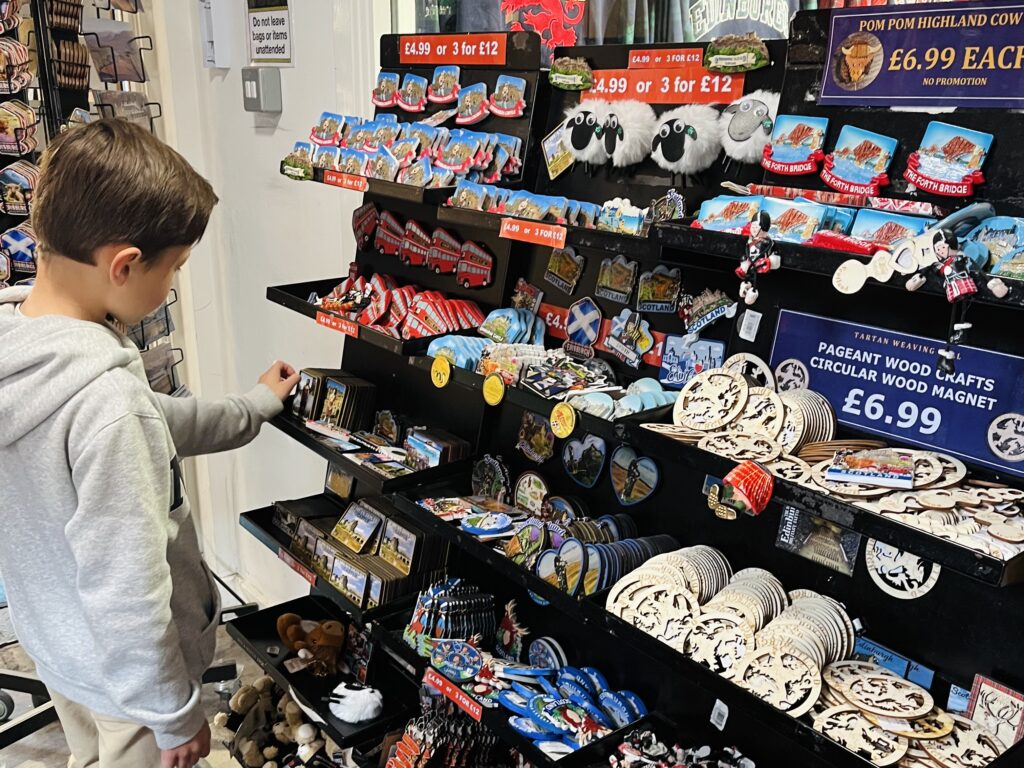
Then we wandered into the Tartan Weaving Mill & Experience on Castlehill near the Royal Mile. The place isn’t just a souvenir shop — you can watch looms turn, see tartan being woven live, and explore a broad collection of woollen goods and kilts. It’s educational, atmospheric, and still playful — perfect for curious travellers.
While browsing, I caught sight of plush sheep toys, Highland cattle replicas, tartan bags, scarves, and the softest cashmere scarves. A lot of shops carry items priced fairly — a 55-pound cashmere scarf felt like a reasonable treat, considering the quality.





After that, the kids got sidetracked by keyrings, magnets, and novelty tees — normal tourist mode activated. I resisted buying everything (well, almost), and nudged us onward — Edinburgh is waiting.
Onward to the City
With the morning light still soft over the gardens and coffee in hand, we started to make our way towards the heart of Edinburgh. The cobbled streets began to hum with buskers and the aroma of roasted beans drifting from tiny cafés. The castle, perched above us, felt like it was quietly watching — waiting for us to climb its hill later in the day.
As we left the calm of Princes Street Gardens behind, I felt that familiar travel flutter — the mix of excitement, curiosity, and the sense that the best part of the day was still ahead. Our Edinburgh story had only just begun.