
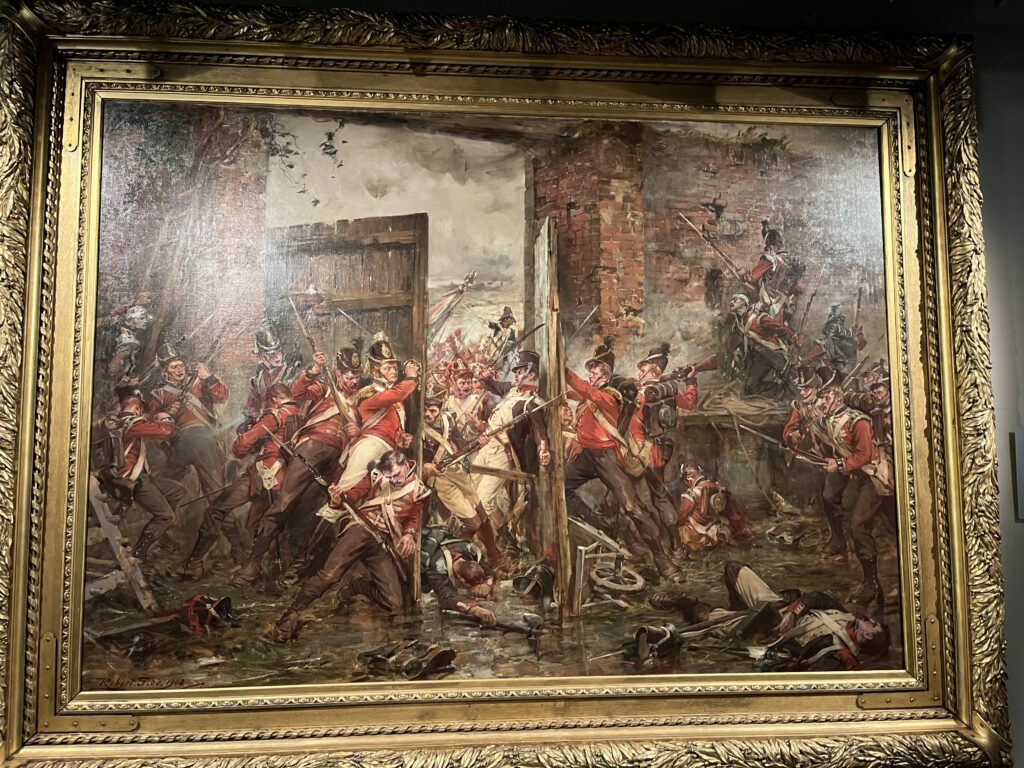
The Legacy of Scotland’s Kings
Before wandering deeper into the castle, I couldn’t help but think of the centuries of history behind those ancient walls. Scotland’s monarchy traces its roots back to Kenneth MacAlpin, who united the Picts and Scots in 843 — the moment many consider the true beginning of Scotland.
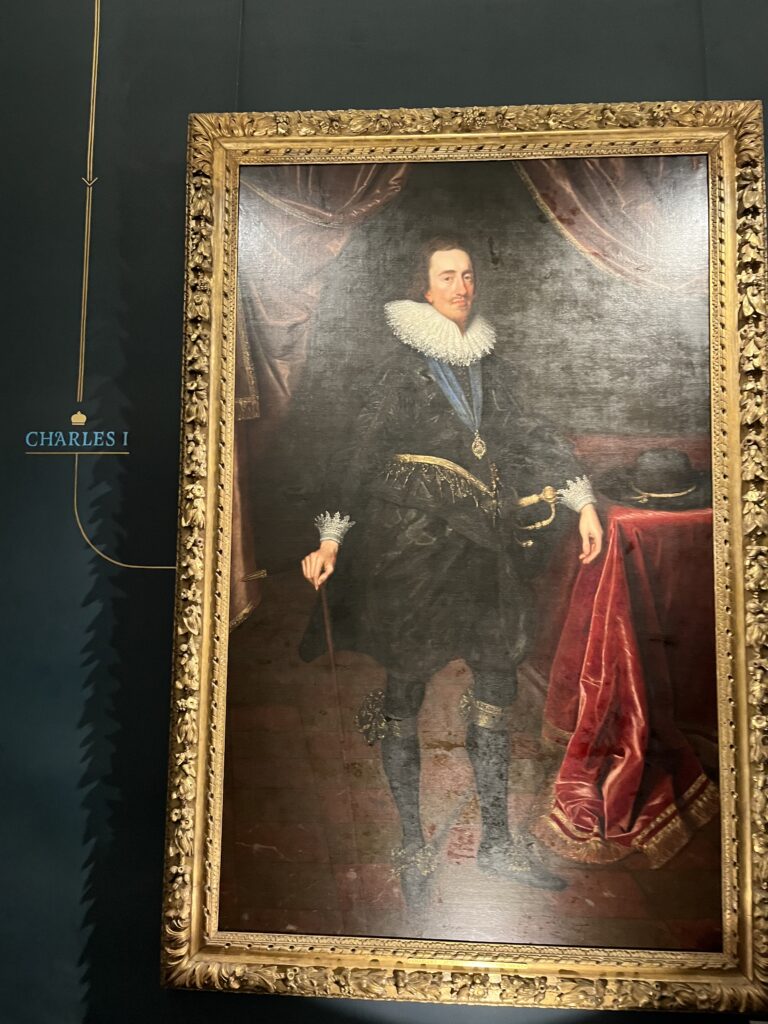
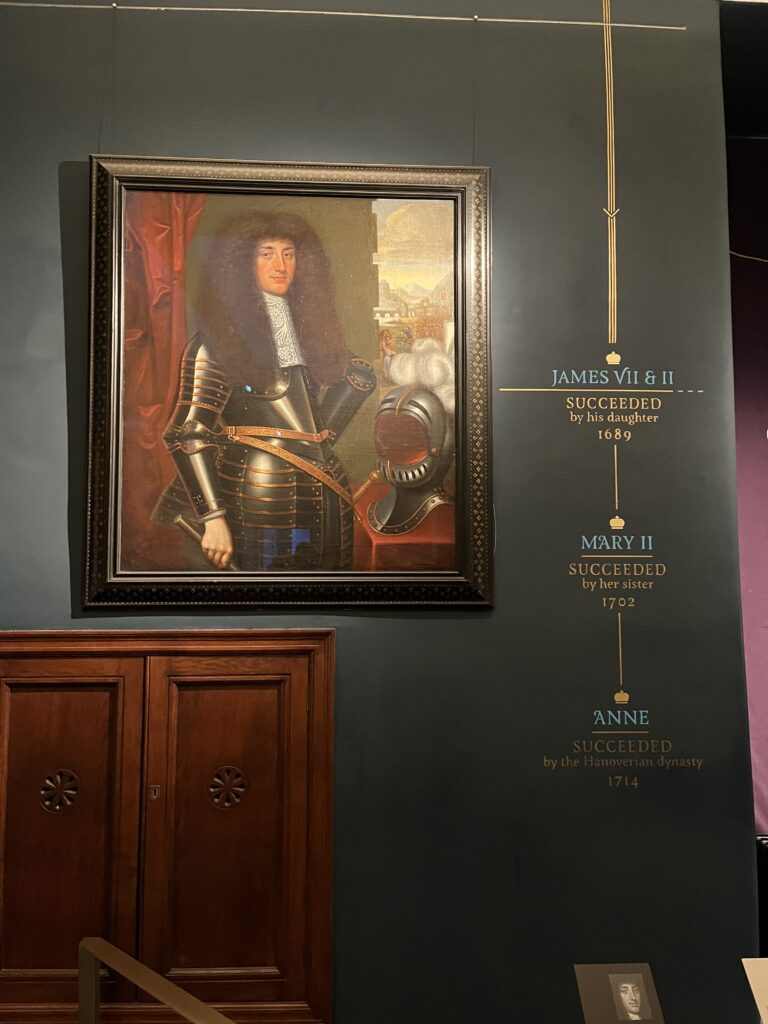
As Kimchi asked me, “Mummy, was there a real king who lived here?”, I found myself telling her about Robert the Bruce, the national hero who fought England for independence, and Mary, Queen of Scots, whose life reads more like a tragic film than a history book.
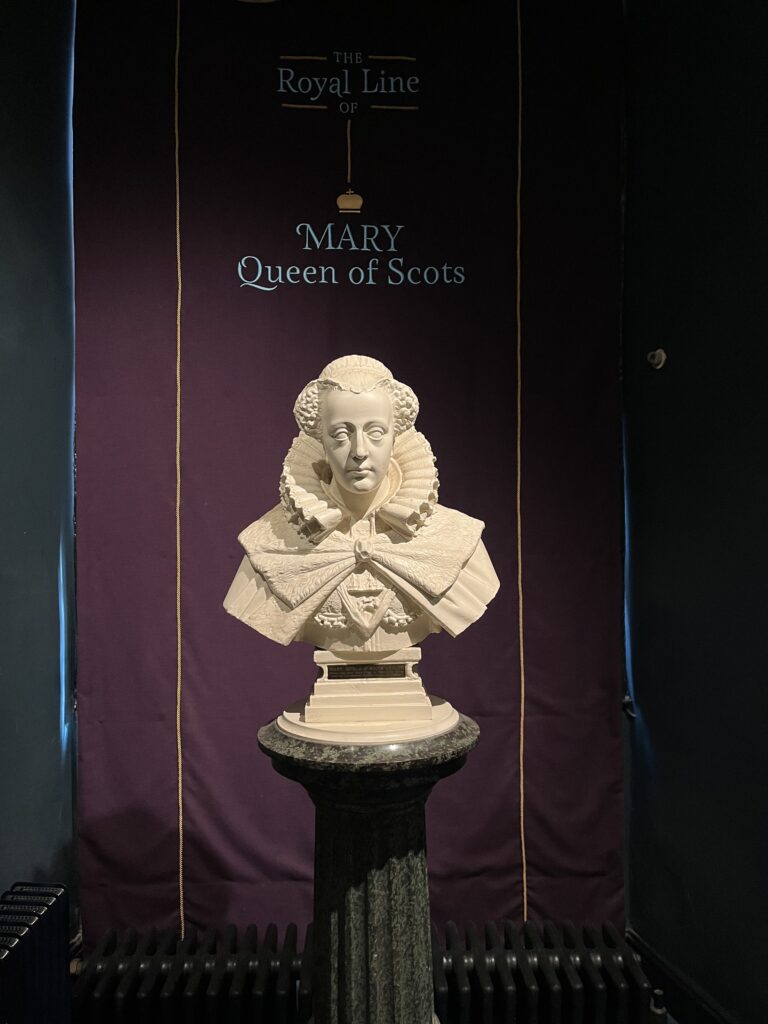
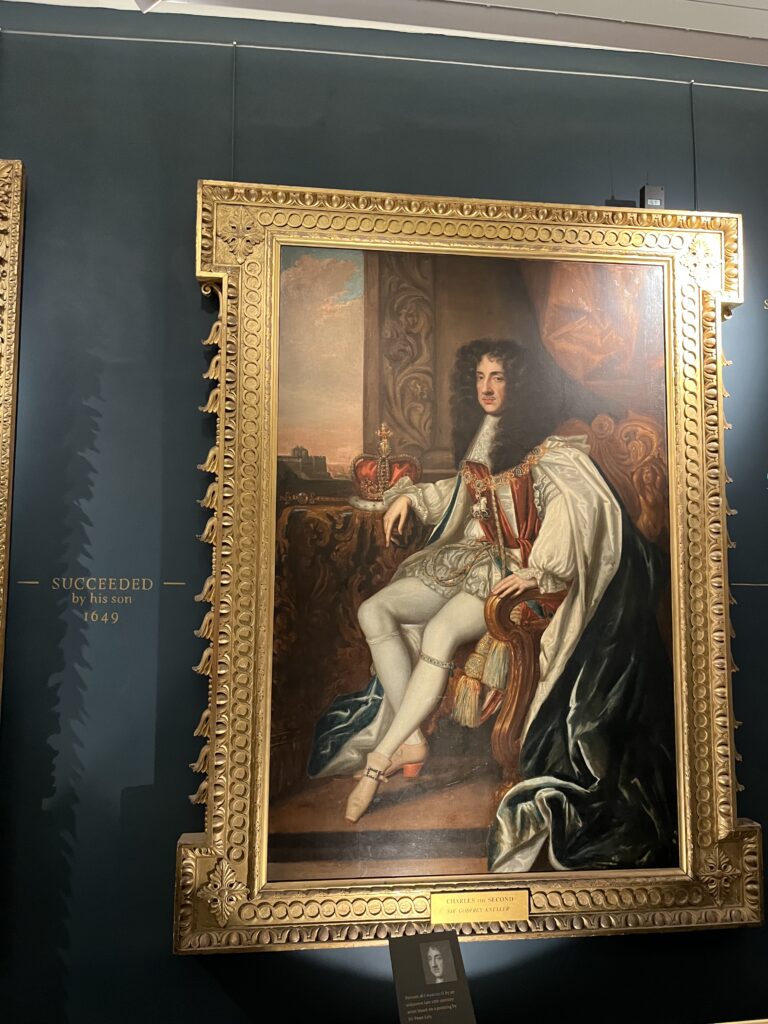
Mary’s son, James VI, later became James I of England, uniting the two crowns in 1603 — the start of what’s called the Union of the Crowns. By 1707, with the Acts of Union, Scotland officially joined with England to form the Kingdom of Great Britain.
It’s fascinating how these walls witnessed that transition — from kings to a kingdom.
Scottish National War Memorial: A Quiet Reverence
Inside the castle grounds lies one of the most moving spaces I’ve ever stepped into — the Scottish National War Memorial.
As soon as we entered, the atmosphere changed. The chatter of tourists softened, replaced by an almost sacred silence.
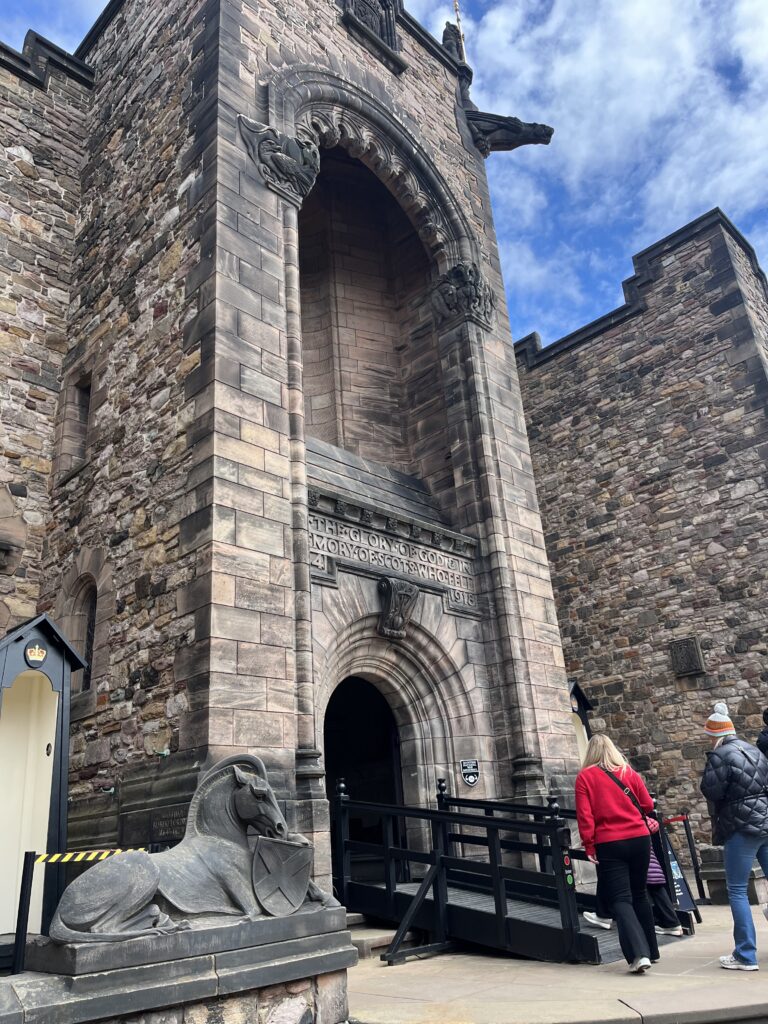
I whispered to Soju and Kimchi, “This place remembers people who never came home.”
It’s heartbreaking to know that one in five Scottish soldiers who served in WWI never returned.
The memorial, completed in 1927, was created by Scotland’s finest artists and craftsmen to honour those who gave their lives not only in the World Wars, but in conflicts since 1945.
The stained glass windows glowed softly, showing themes of courage, peace, justice, and the survival of spirit — all while sunlight spilled across the marble floor.
Tip: Visit this memorial before the castle gets crowded. It’s small but incredibly powerful — and it deserves quiet reflection.
The Earl Haig Statue — A Symbol of Honour and Controversy
Outside, near Hospital Square, stands the imposing statue of Field Marshal Earl Haig.
Born in Edinburgh in 1861, Haig was the commander of the British Army during WWI, leading troops in major battles like the Somme and Passchendaele.
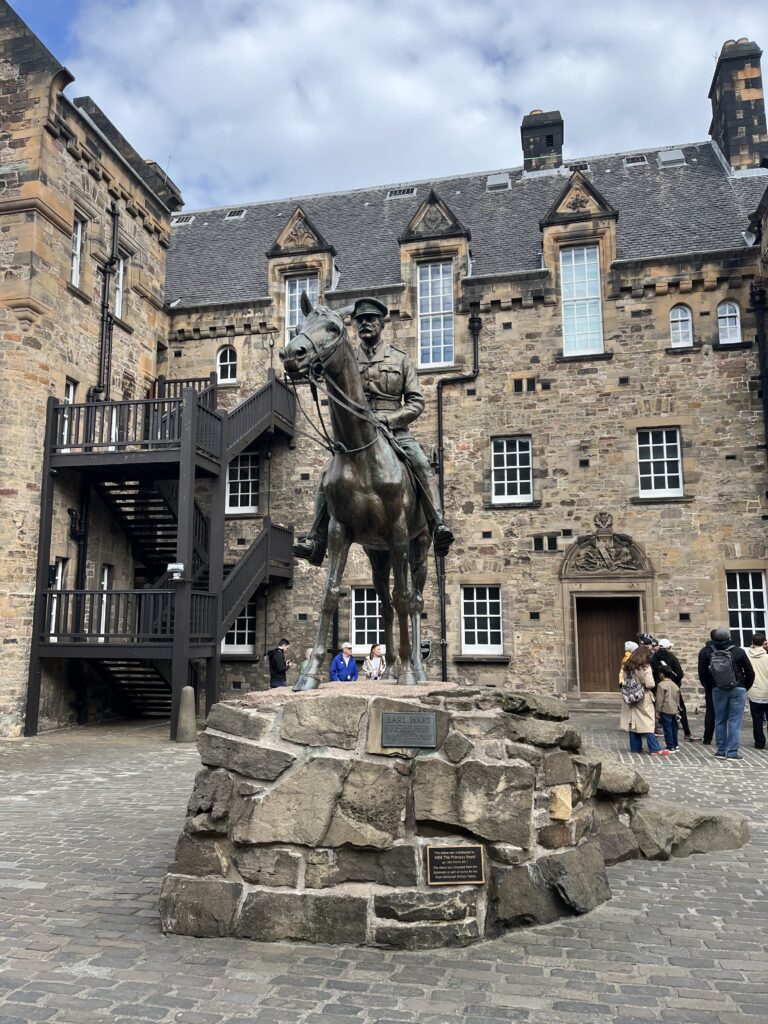
While some hail him as a hero who helped end the war, others criticise his leadership for the staggering loss of life. Even his statue, sculpted by George Edward Wade in 1923, has sparked debates: is it a monument to victory, or a reminder of the cost of war?
Still, I found it quite meaningful that he stands here — looking over his hometown, forever tied to both the glory and the grief of that era.
National War Museum — Scotland’s Military Time Capsule
Inside the castle walls lies the National War Museum, one of my absolute favourite parts of the visit.
Opened in 1933 within an 18th-century armoury, it’s now run by National Museums Scotland.
The moment we entered, Soju gasped, “It smells like old iron!” — not wrong, since the museum is filled with centuries of weapons, uniforms, and medals. But it’s not just about war — it’s about people.
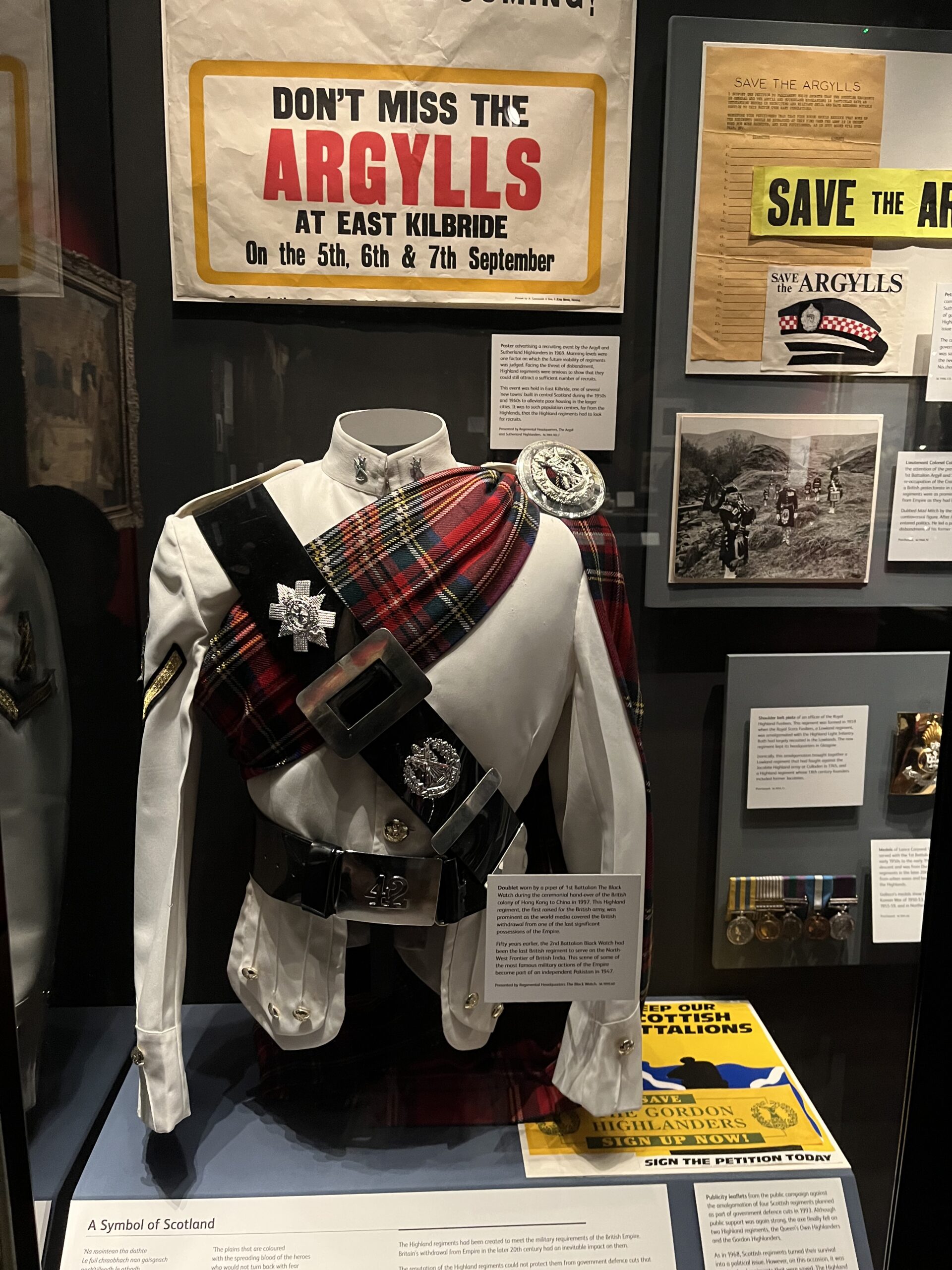
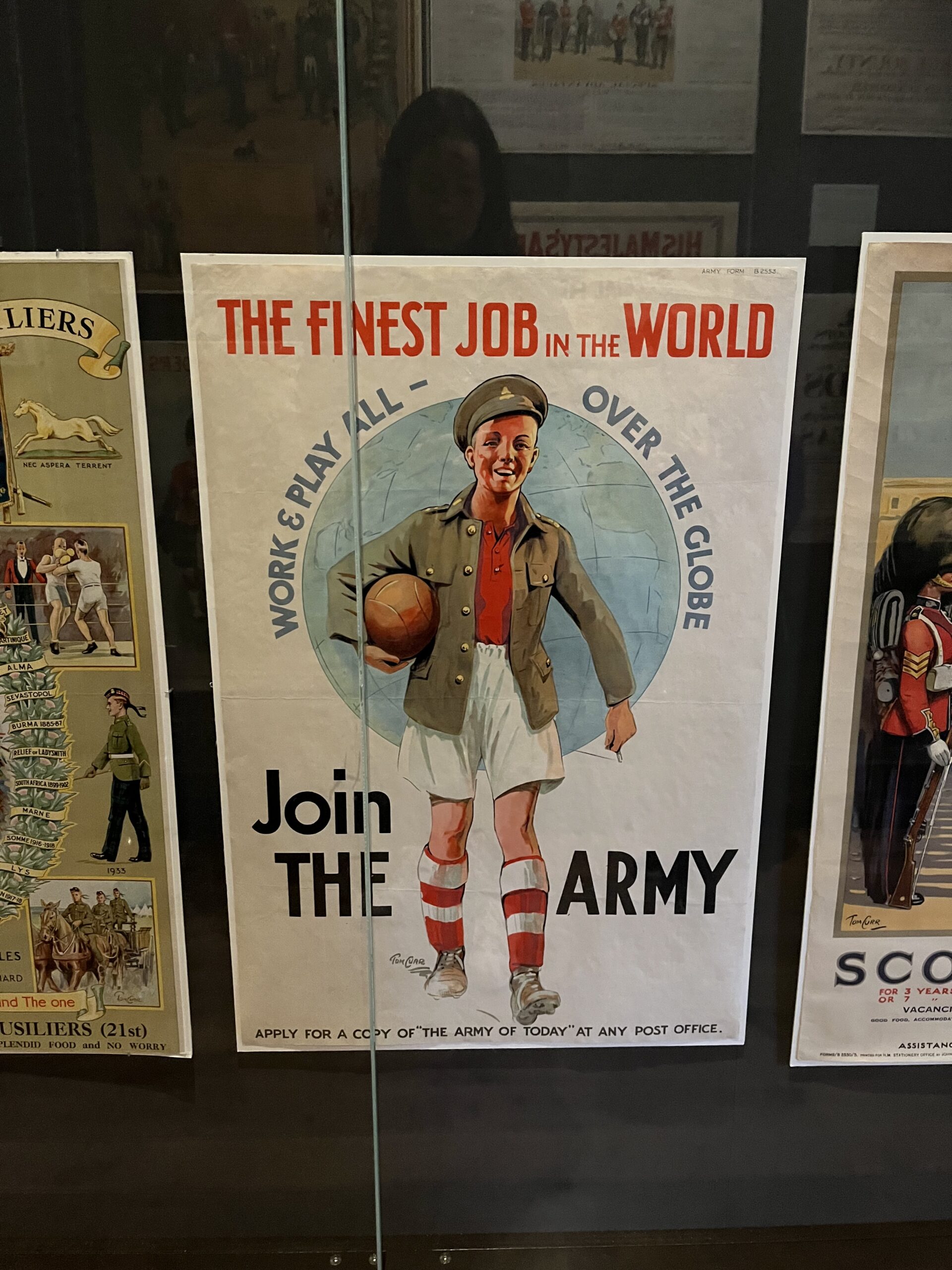
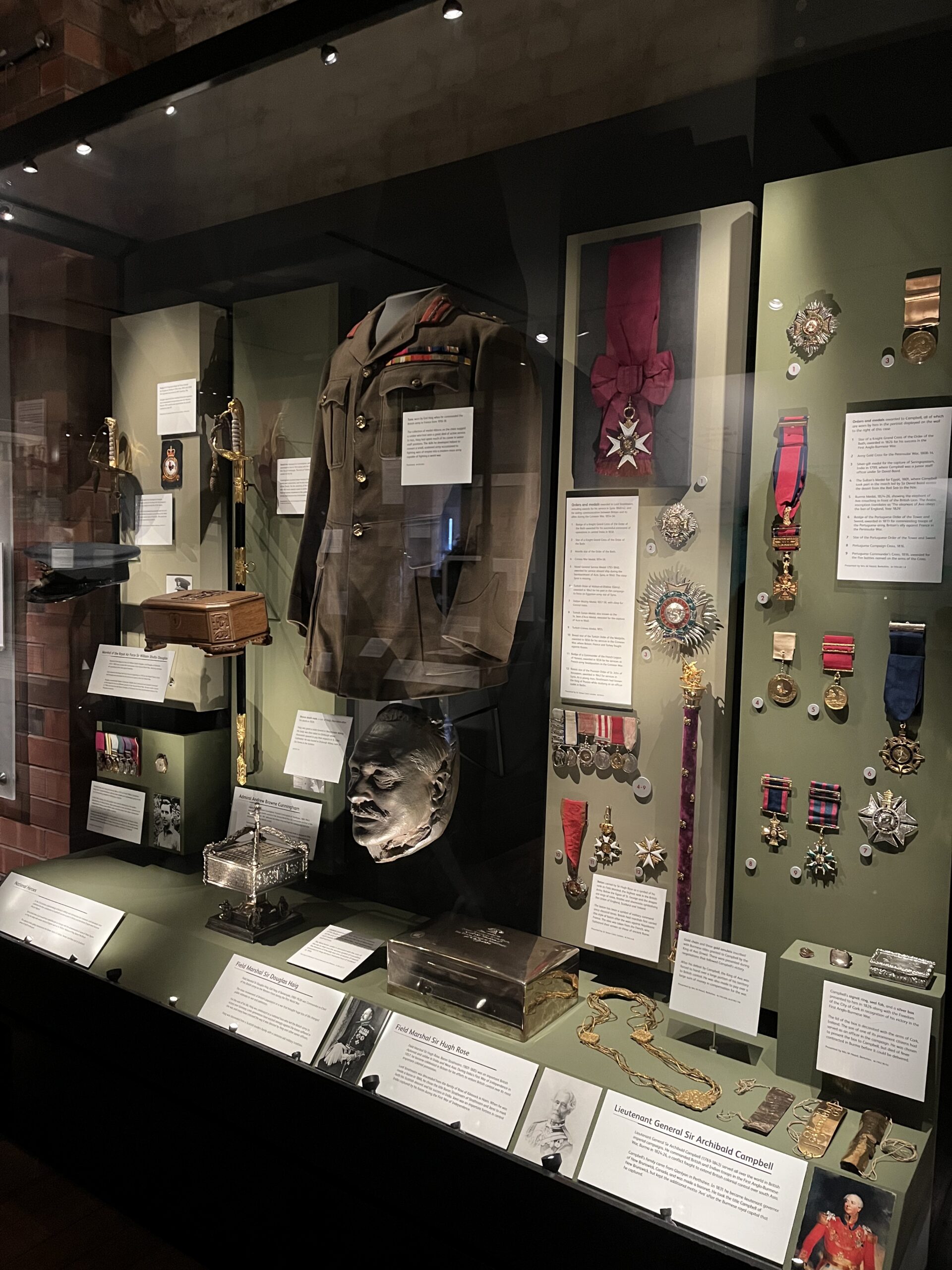
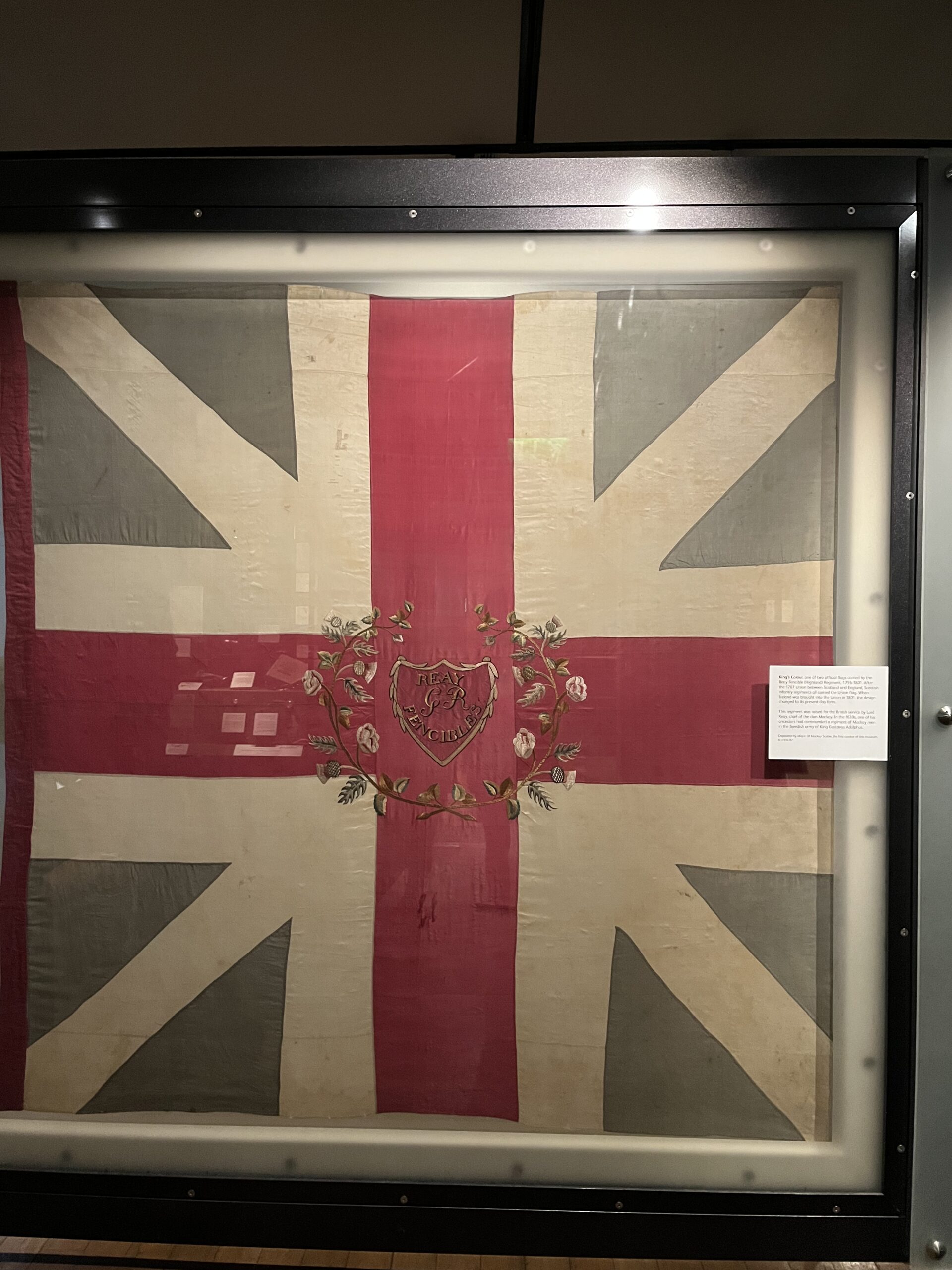
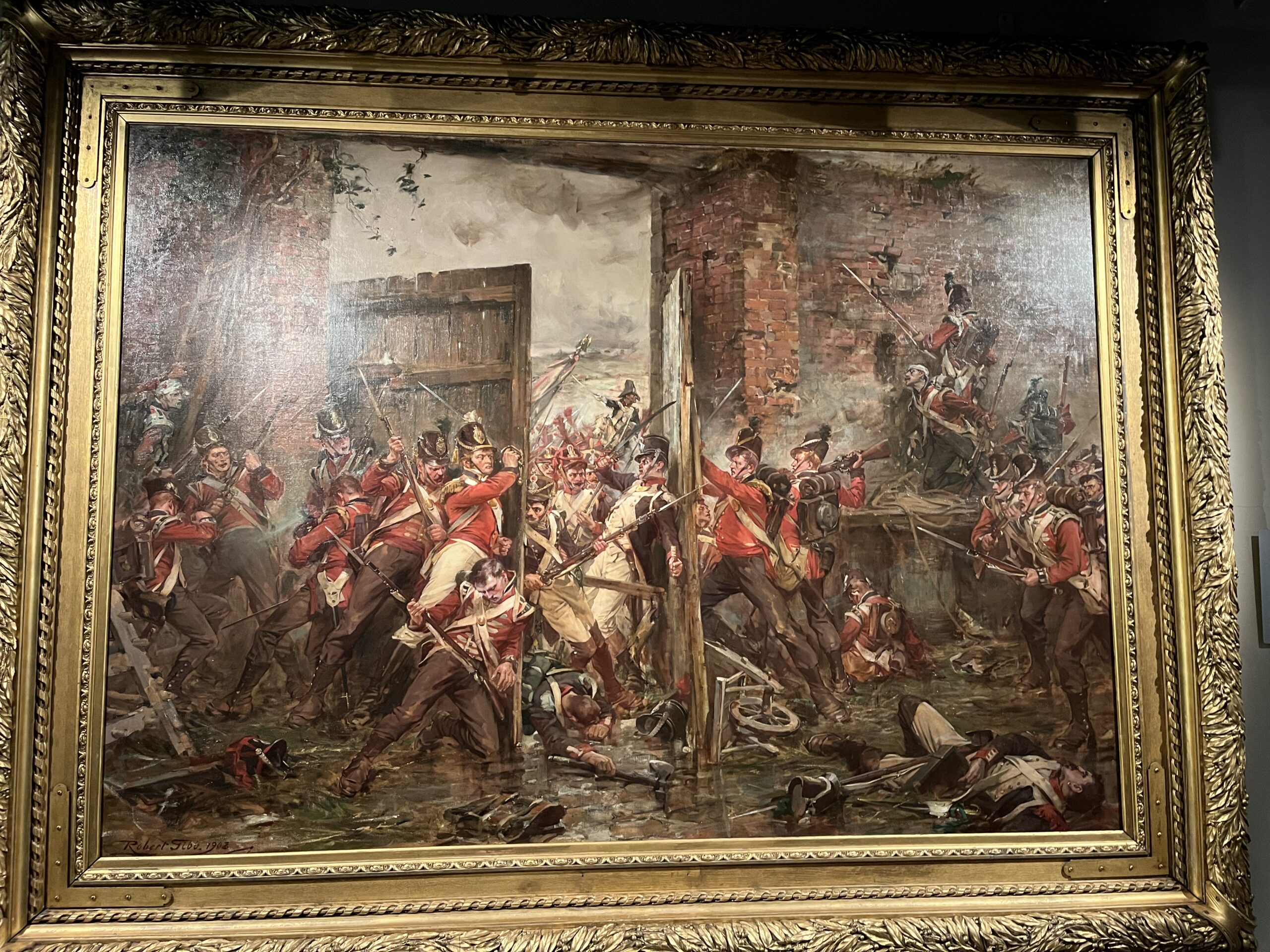
We read letters soldiers wrote to their families, touched the glass cases that held Highland claymores, and stood in front of portraits of young men who probably never came home.
Even Kimchi went quiet, whispering, “They look like kids.”
That hit me. Because behind every sword, every medal, there was a person — a son, a husband, a father.
Tip for families:
- The museum is quite large — plan at least an hour here.
- Start from the War Memorial, then move to the museum to see how Scotland’s history of courage unfolded.
- If you’re into details, the audio guide gives historical context and personal soldier stories that are worth hearing.
The Royal Scots Regimental Museum — Four Centuries of Duty
Just next door is the Royal Scots Regimental Museum, dedicated to the oldest infantry regiment in the British Army — founded in 1633!
It’s less flashy than the main museum but deeply personal.
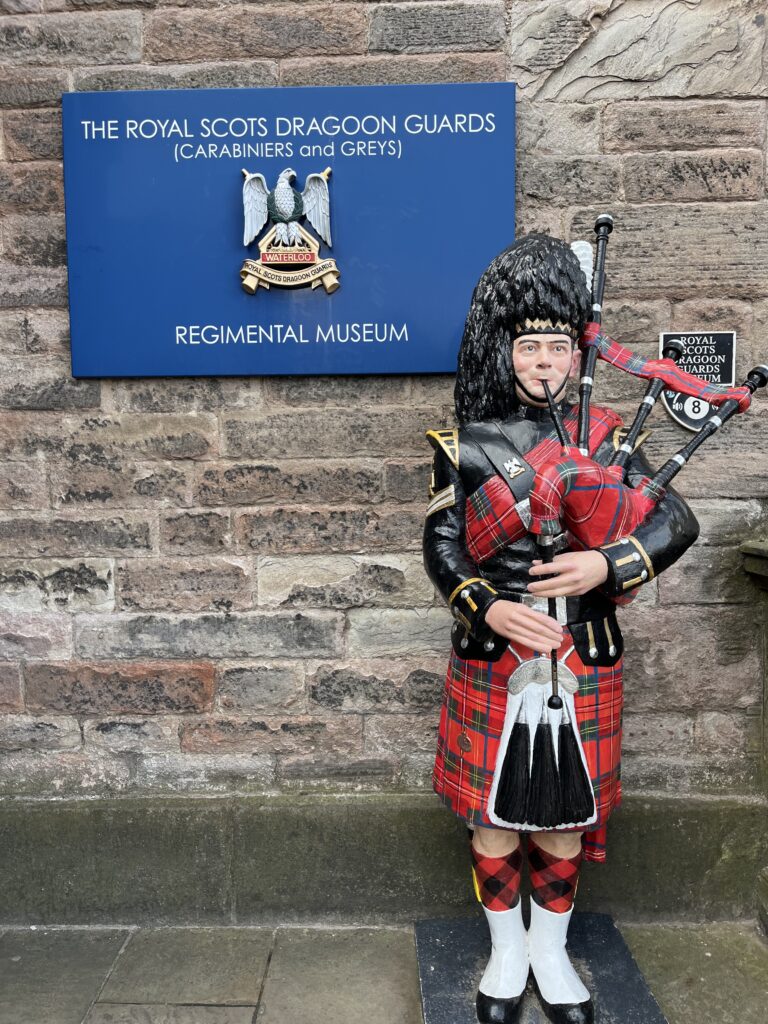
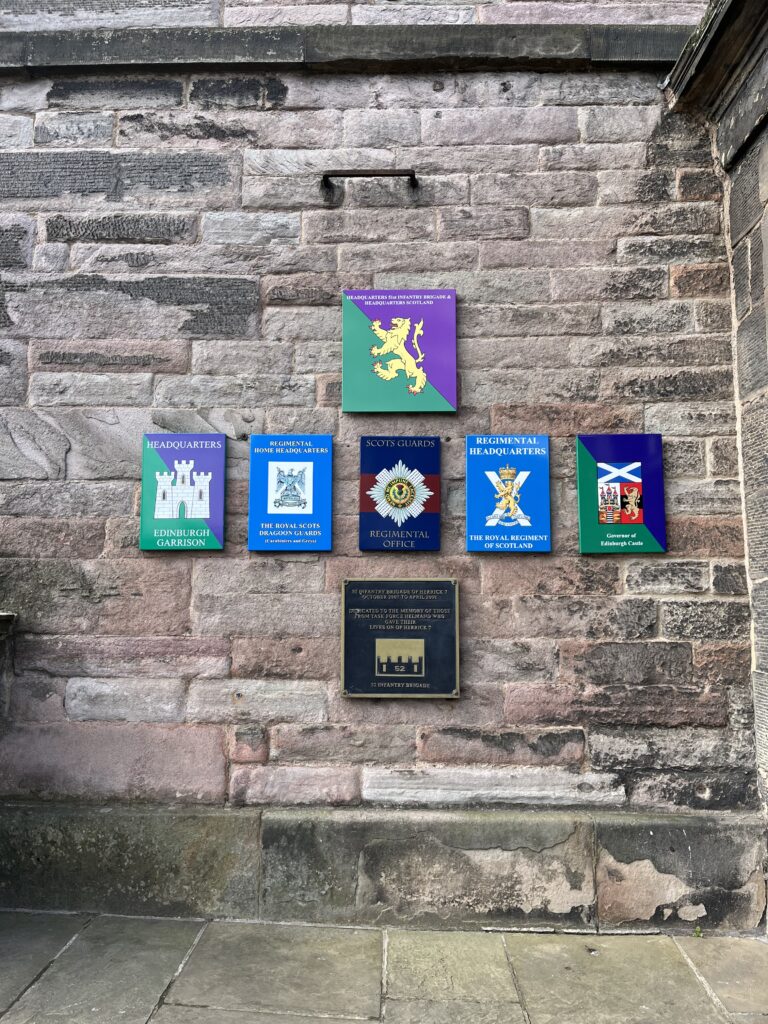
You’ll find diaries from soldiers in Iraq and Afghanistan, old uniforms, and medals that have survived generations. It feels less like an exhibition and more like walking through a scrapbook of Scottish bravery.
I didn’t get to take photos inside (no photography allowed again), but honestly, sometimes that’s better — it forces you to look instead of just snap.
Quick Tip: The Royal Scots shop near the exit has some of the best souvenirs — including authentic tartan bookmarks and military pins that make meaningful gifts.
Looking Out from the Castle Walls
Before we left, I stood by the ramparts and looked out over Edinburgh’s skyline — the sun dipping behind the city, rooftops glowing gold.
The bagpipes echoed faintly from somewhere down the Royal Mile, and for a brief moment, the whole city felt like it was holding its breath.
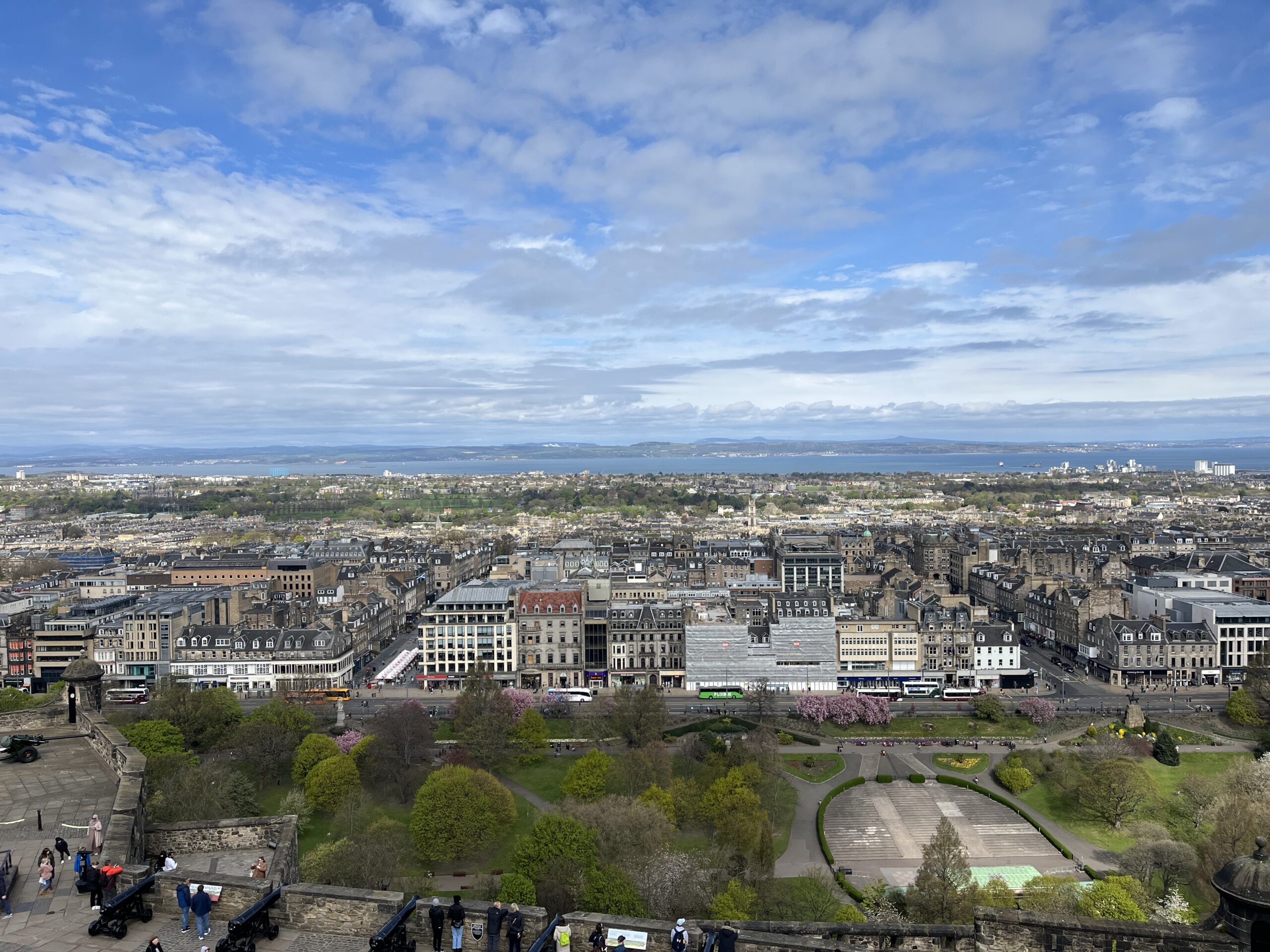
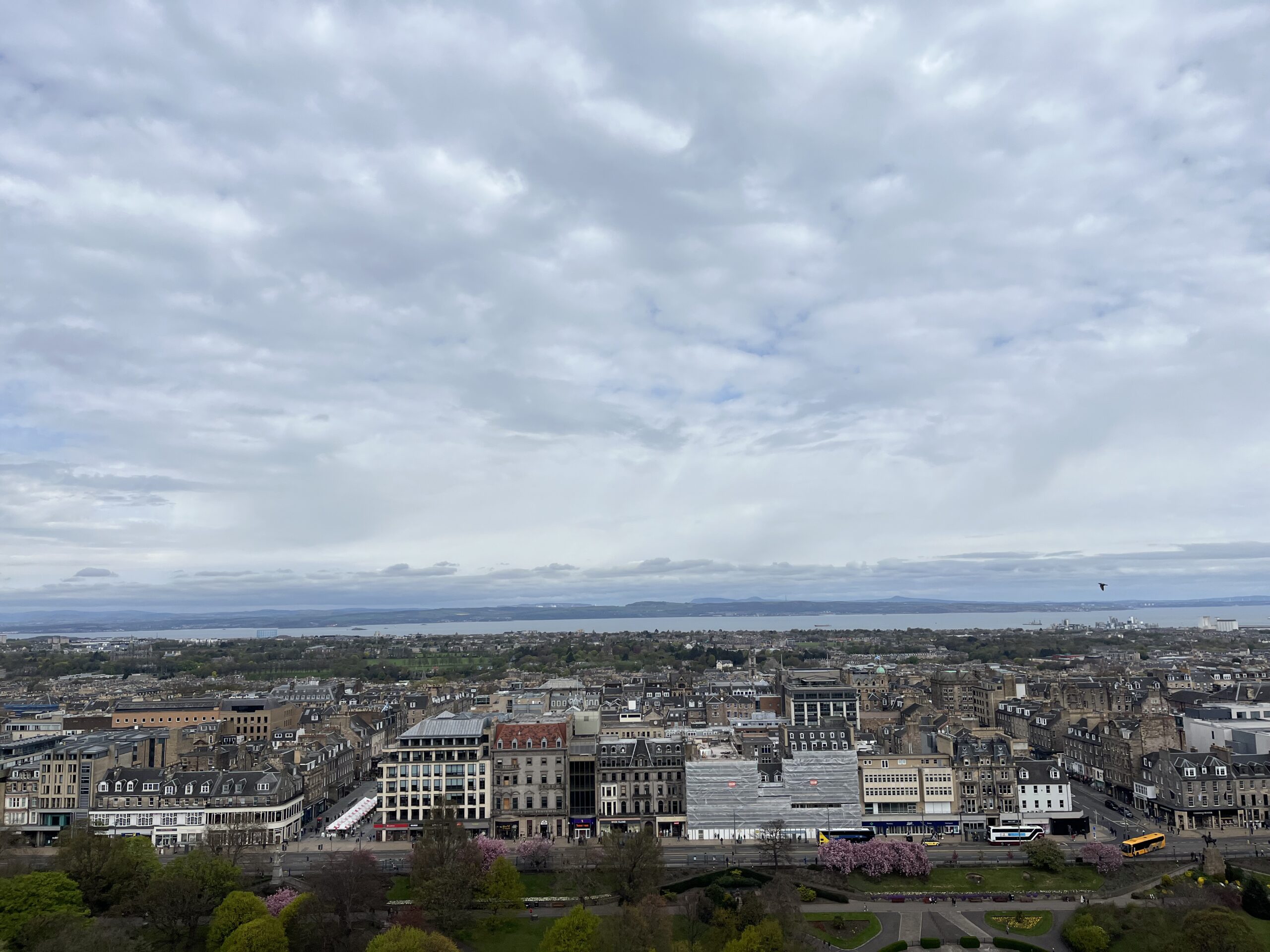
This wasn’t just another castle visit. It was a day spent walking through centuries — from kings and queens to ordinary soldiers whose courage shaped Scotland as we know it.
And as we left, Soju asked,
“Mummy, do you think ghosts of the soldiers live here too?”
I smiled. “Maybe, love. But if they do, I think they’re proud we remembered them today.”