
[Whitby Travel Diary] St Mary’s Church – Where Dracula’s Shadow Meets British Humour on the Cliff
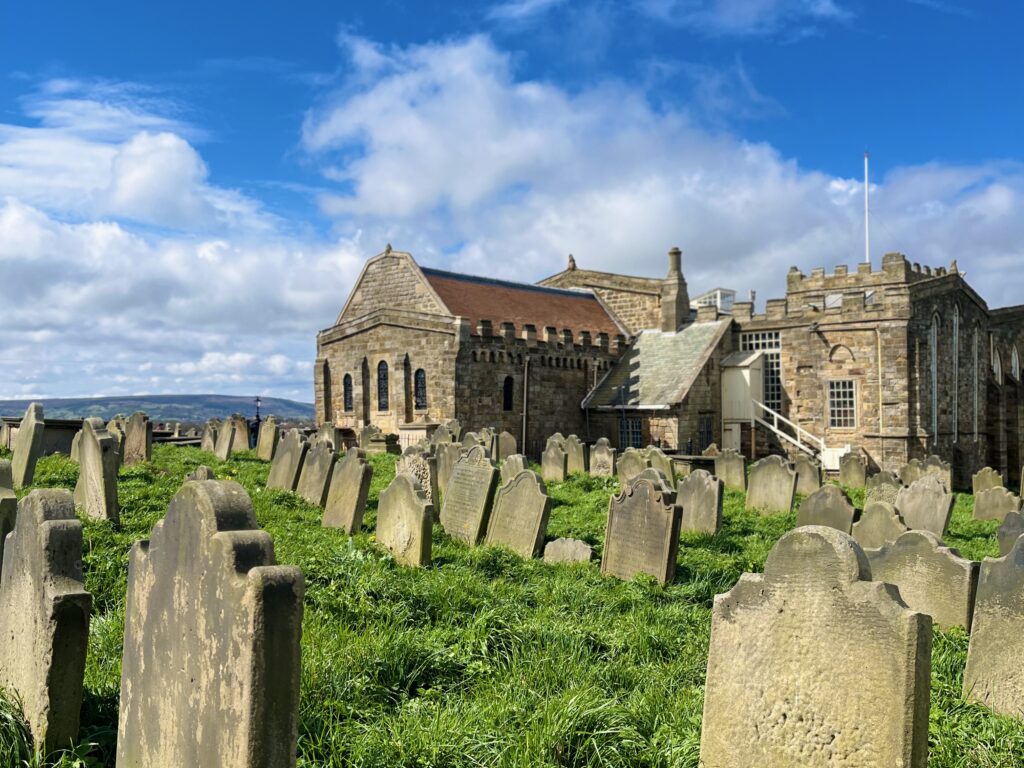
As we stepped out through the gate of Whitby Abbey, there it was — St Mary’s Church, right in front of us! I actually blinked in surprise because I hadn’t realised how close the two landmarks were. They share the same hilltop, and you wouldn’t understand that closeness until you stand there yourself, wind on your face, sea stretching below.
Where Gothic Fiction Meets Real Faith
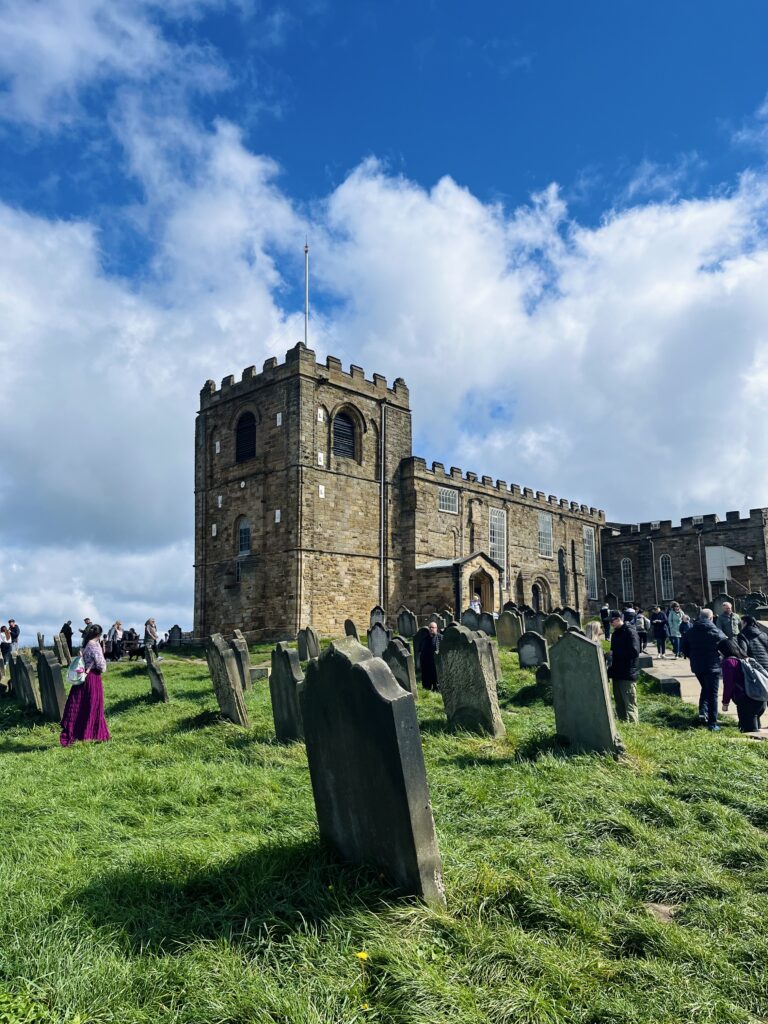
This small Anglican church might look modest at first glance, but it’s one of the most atmospheric places I’ve visited in England. Bram Stoker once walked these same grounds, and the windswept churchyard — along with the Abbey ruins behind — inspired scenes from Dracula. Standing there, I could easily imagine the Count’s shadow creeping up from the sea mist.
Even though centuries have passed, St Mary’s still holds regular services — weddings, baptisms, and big celebrations like Christmas and Easter. It’s not just a relic; it’s part of everyday life for Whitby’s people. I found that oddly moving.
The Churchyard by the Sea
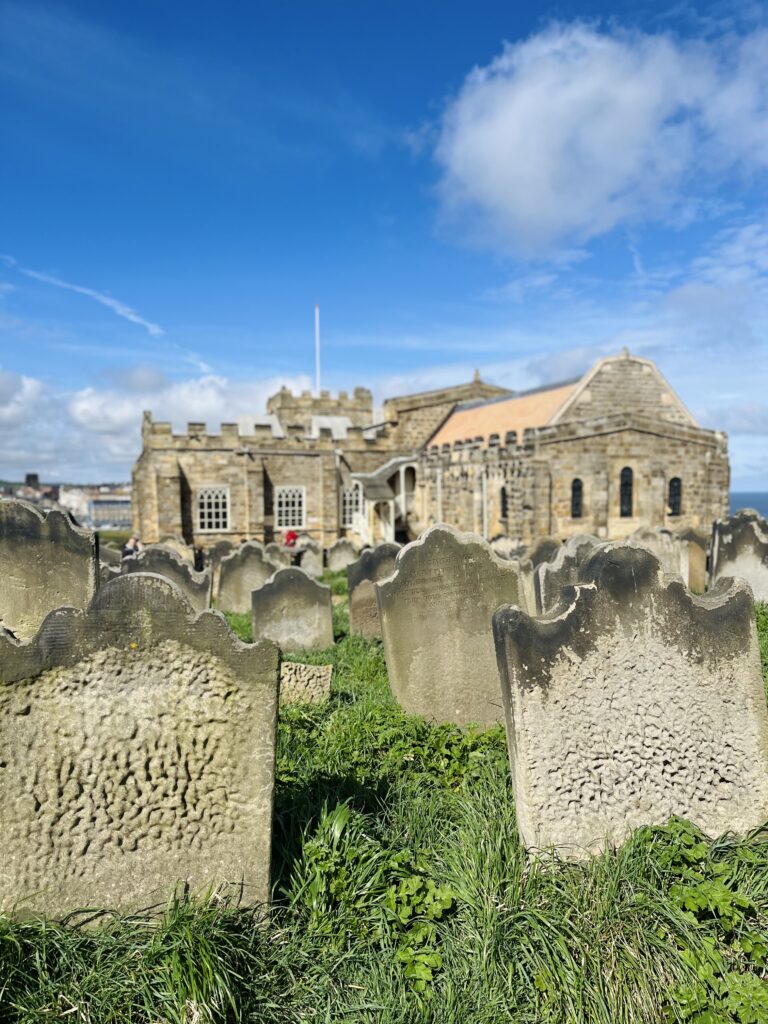
Whitby has always been a town of fishermen and sailors, and this church has long been their spiritual anchor. Inside the church, walls are carved with the names of sailors who never returned. Outside, the gravestones tell their stories — some barely readable after centuries of wind, rain, and salt air.
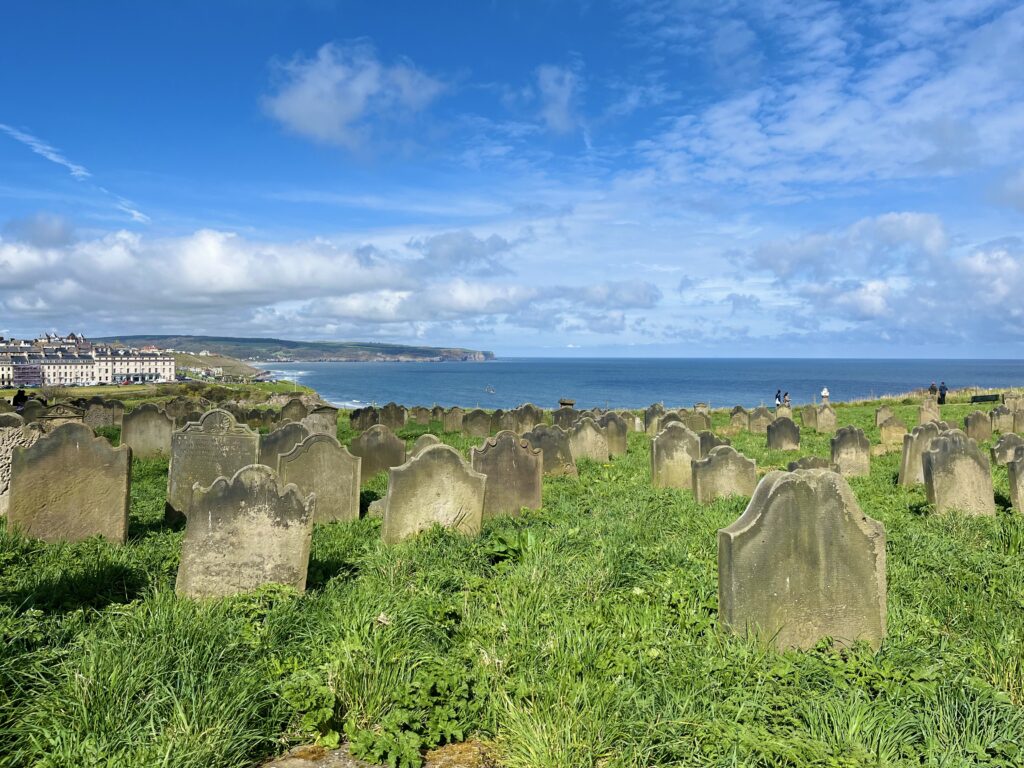
The churchyard runs right to the cliff’s edge. Some graves have already been lost to erosion, as locals say the sea has taken them. It’s hauntingly beautiful — the kind of scene that makes you quiet without realising why.
British Humour Among the Tombstones
Walking among hundreds of ancient gravestones, I couldn’t help but chuckle. The British really do have a sense of humour, even in death! Some of the epitaphs we read were unforgettable:
- “I told you I was ill.”
- “Gone fishing.”
- “He came, he moaned, he died.”
- “Not dead, just resting.”
I laughed out loud — and then felt strangely comforted. Death, here, isn’t treated as something heavy or tragic; it’s simply another part of life, met with a wink and a smile. I found that very British, and very human.
Family Moments Among the Stones
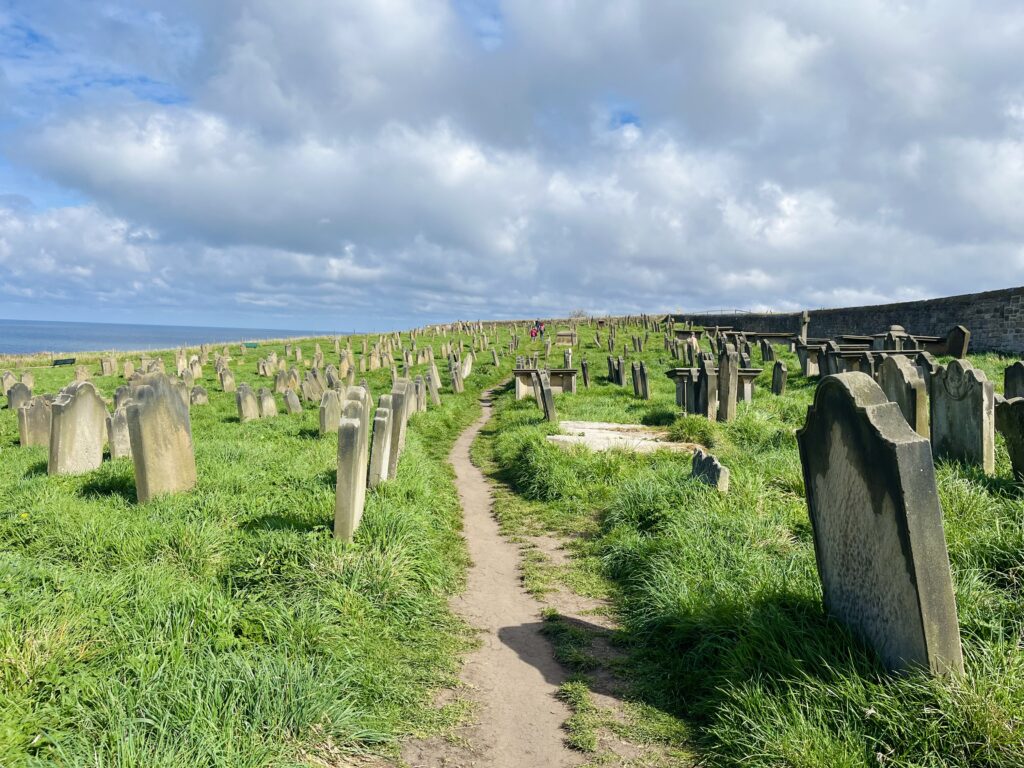
While I was lost in reading old epitaphs, Kimchi was already exploring around, pointing out interesting inscriptions and posing for photos, saying, “Mum, look at this one!” The whole place felt oddly peaceful — solemn but not scary. Even surrounded by centuries-old tombstones, there was a sense of warmth and life, as if the past and present were quietly coexisting here. Watching Chloe curiously wander and react to each stone made the experience even more real and memorable.
Nearby, a caretaker was trimming the grass carefully, making sure the graves looked tidy. It reminded me that this isn’t just a tourist site — it’s a place where locals still care for their ancestors, where history breathes quietly between the stones.
Caedmon’s Cross – The Poet Shepherd
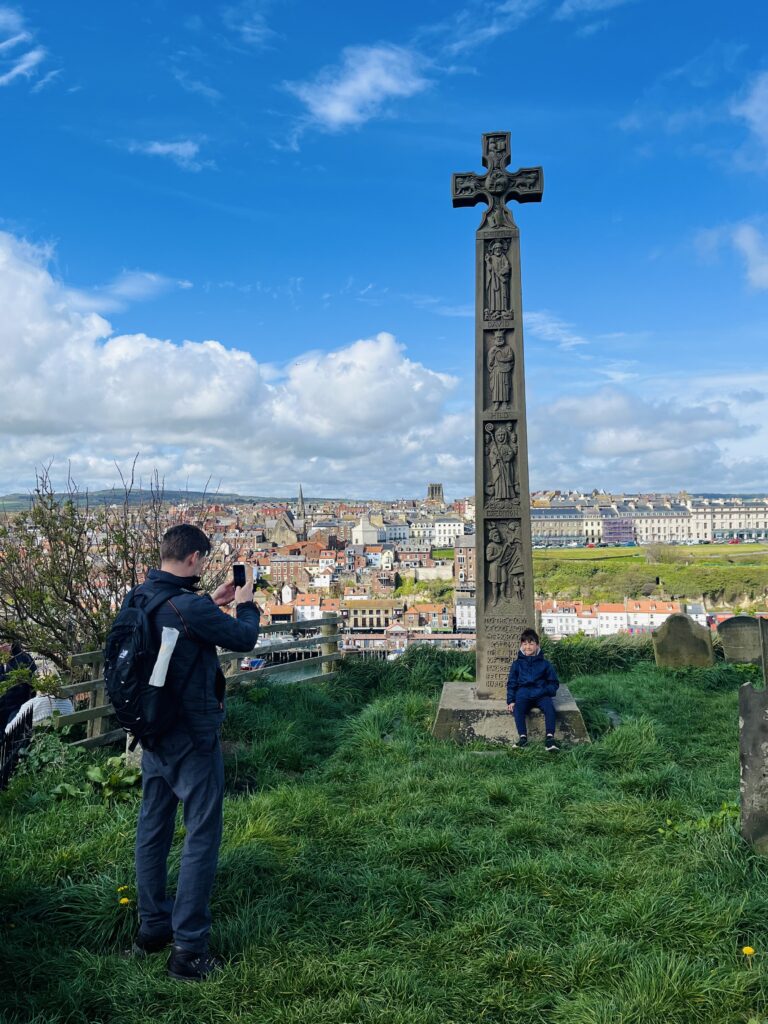
Behind the church stands the Caedmon Memorial Cross, built in honour of Caedmon, often called England’s first poet. He was once a simple stablehand at Whitby Abbey. According to legend, one night an angel came to him in a dream, telling him to sing of creation — and from that day, he could compose beautiful verses in Old English. The carvings on the cross show scenes from Christ’s life, angels, and the moment Caedmon found his voice. Facing the sea, it feels like a lighthouse for the soul — a symbol of faith and inspiration watching over Whitby.
Views & Reflections
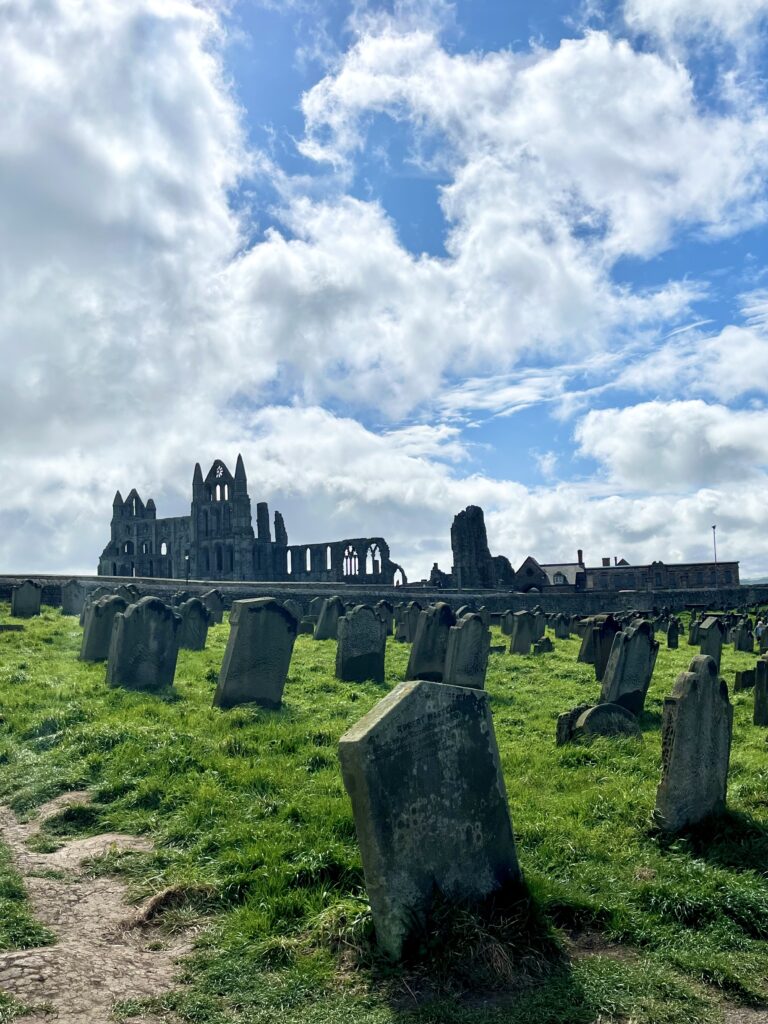
From the churchyard, the view of Whitby Abbey is breathtaking — the ruins on one side, the North Sea on the other. The day we went, the sky was clear and bright, not spooky at all. But locals say at night it’s a very different story: a woman’s cries echo on the wind, and some even claim to have seen a black dog wandering near the graves — perhaps Dracula himself, arriving from the sea.
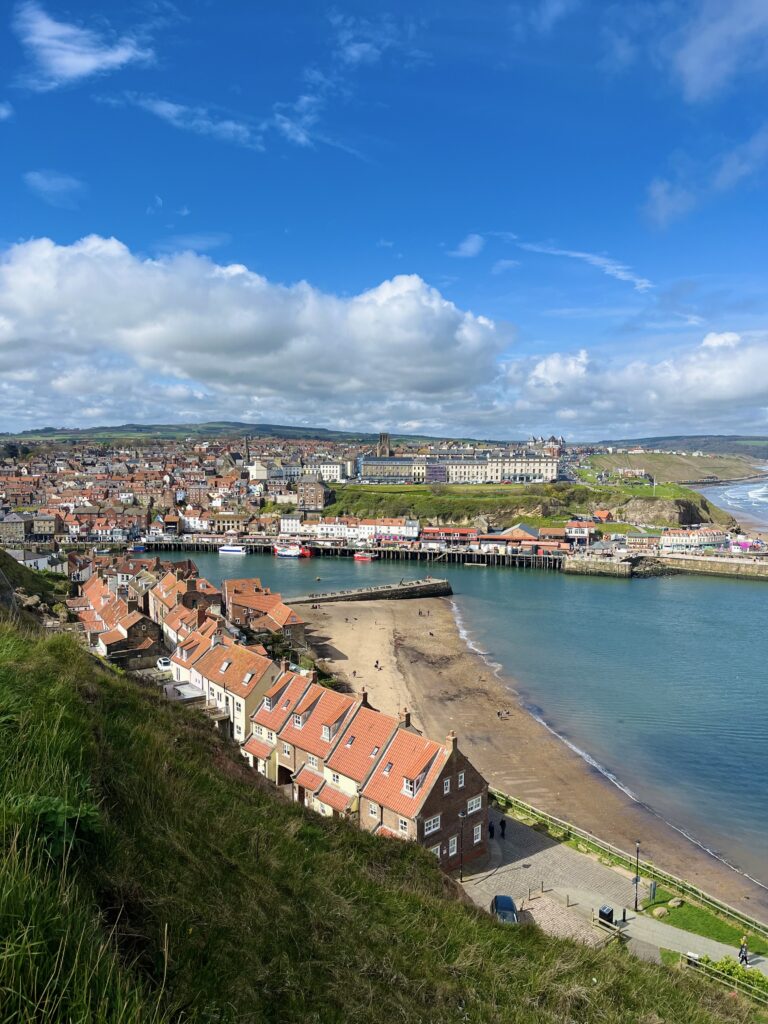
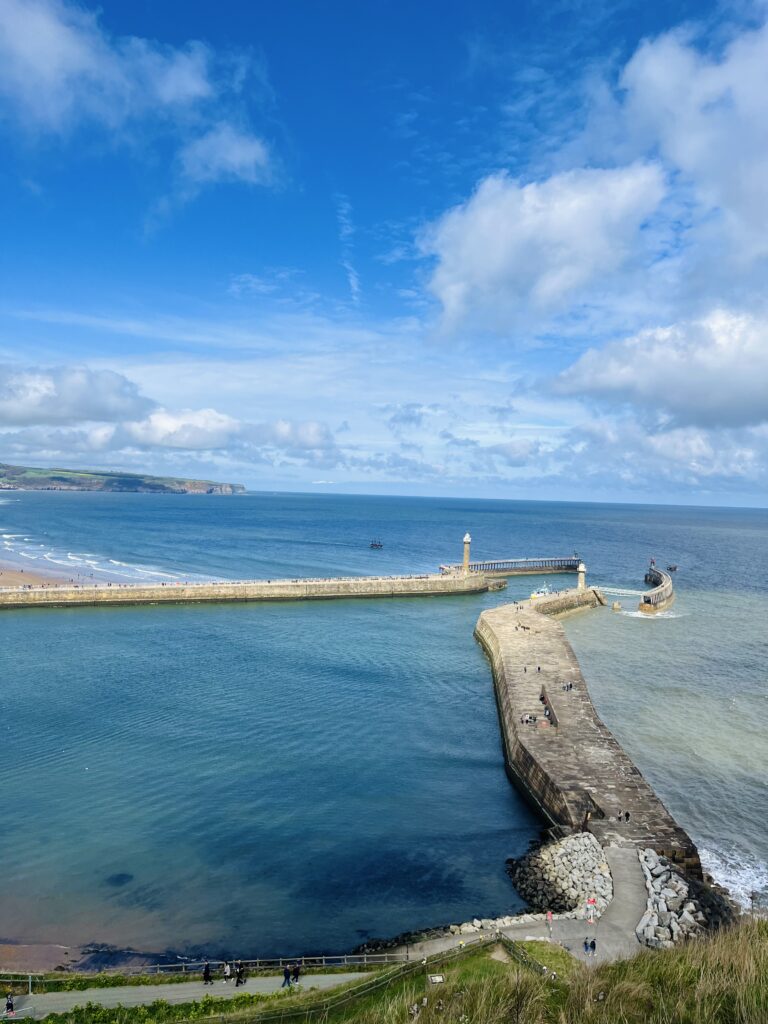
Even without ghosts, the place carries an energy you can feel. As I looked down at the harbour and the town below, it struck me that Whitby isn’t just a Gothic postcard — it’s a living story of faith, humour, tragedy, and hope all woven together.
So, if you ever make your way up those famous 199 steps, don’t stop at the Abbey gates. Take a few more steps to St Mary’s Church. Walk among the graves, feel the sea breeze, and maybe — just maybe — smile at a tombstone. It’s the most human reminder that even in history and legend, life always finds a way to laugh.